

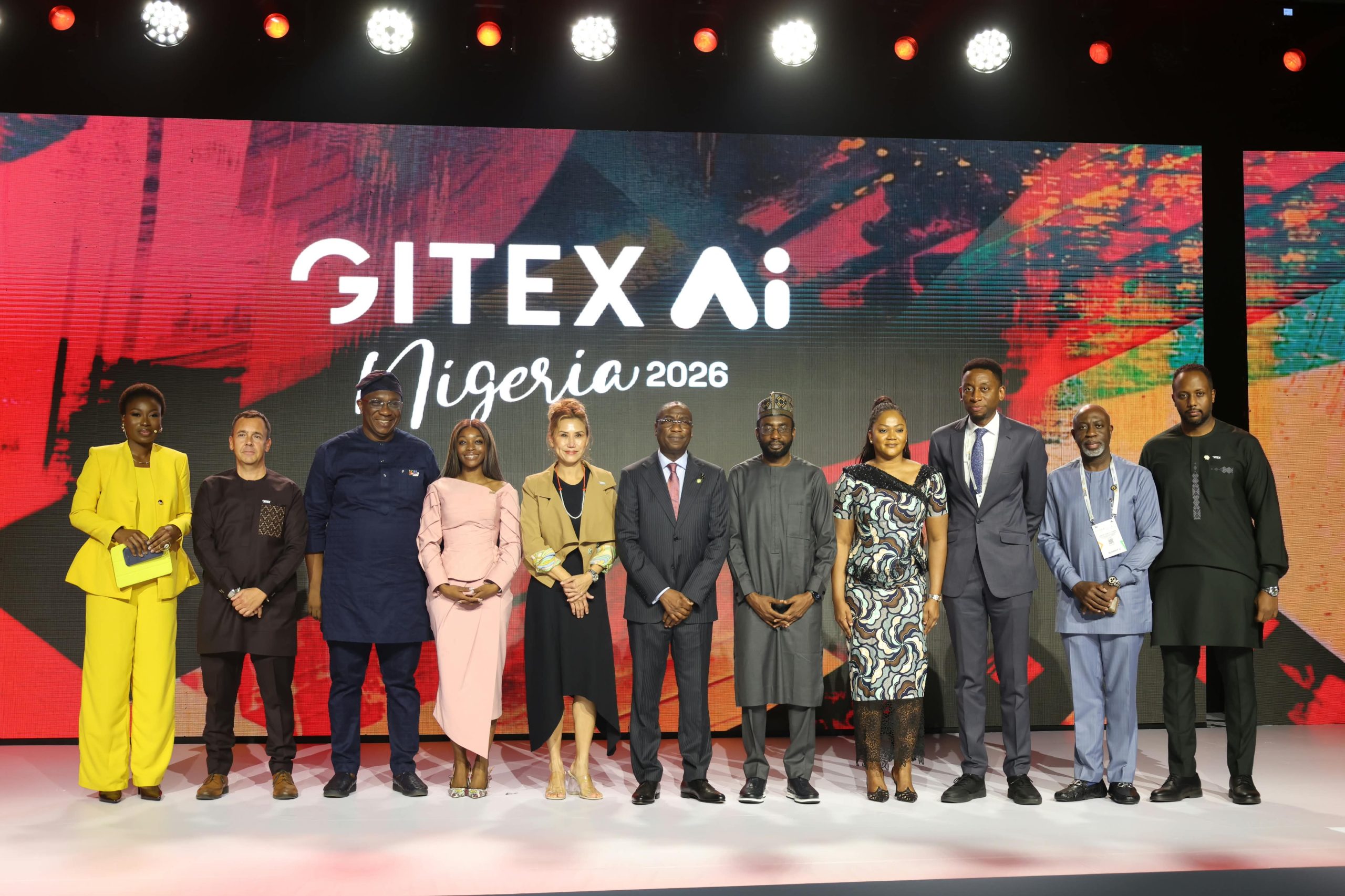
Tech leaders, investors, policymakers, and startup founders gathered in Lagos on 2 September 2026 for the high-profile inauguration of GITEX NIGERIA’s second edition. Following a sold-out Government Leadership & AI Summit in Abuja, West Africa’s flagship technology, artificial intelligence, and startup gathering shifted to the nation’s commercial center for two days of strategic dialogue, product launches, and ecosystem development. Held under the patronage of President Bola Ahmed Tinubu GCFR, the event was organized by KAOUN International, supported by the Federal Ministry of Communications, Innovation and Digital Economy alongside NITDA, and endorsed by the Lagos State Government.
The conference underscored Lagos’s rapid emergence as a premier global hub for technology and entrepreneurship. Ranked as the world’s fastest-growing tech hub in the 2025 Dealroom Global Tech Ecosystem Index, the metropolis saw its enterprise value surge 11.6-fold to $15.3 billion, outpacing 287 global cities and producing five unicorns. Today, Lagos hosts almost 1,000 active startups—representing two-thirds of Nigeria’s tech ecosystem—and accounts for 23 of the 28 Nigerian firms on the Financial Times’ 2025 list of Africa’s fastest-growing companies.
Reflecting on these milestones, Lagos State Deputy Governor Dr. Kadri Obafemi Hamzat reiterated the city’s ambition to be recognized not just as Nigeria’s commercial engine, but as Africa’s innovation capital. He emphasized that what happens in Lagos shapes outcomes for a continental population of 1.4 billion, making it the natural venue for charting Africa’s economic future. Hamzat noted that such leadership cannot merely be claimed; it must be continually earned through robust physical and digital infrastructure, world-class talent, sound public policy, and decisive execution.
Continental economic integration served as another focal point, with AfCFTA Secretariat Secretary-General Wamkele Mene advocating for self-reliant, interoperable African digital infrastructure. Mene cautioned against relying on imported digital frameworks, arguing that Africa has the talent and technical capability to drive its own transformation. By acting decisively to construct a unified continental digital marketplace, he noted, African businesses can seamlessly transact, scale across borders, and turn digital innovation into tangible, cross-border commercial trade.
Nigeria’s strategic push toward technological self-reliance was further articulated by NITDA Director General Kashifu Inuwa Abdullahi, who urged a transition from consumers to creators. Abdullahi highlighted the need for intentional national policies that create an enabling environment for young innovators solving real-world challenges. He stressed that Nigeria must secure its data, cloud, operational, and AI sovereignty, ensuring the nation actively builds the core architectures of the future economy rather than remaining a passive recipient of external solutions.
Foundational trust and digital infrastructure also took center stage following the enactment of the National Identity Management Commission (NIMC) Act 2026, which overhauled 2007 legislation to modernize digital identity frameworks around the National Identification Number (NIN). NIMC Director-General Engr. Abisoye Coker-Odusote highlighted that connection without embedded trust creates systemic vulnerability. She observed that secure digital identity, public key infrastructure, and digital public infrastructure are vital to facilitating the paperless onboarding, verified contracts, and cross-border authentication required for AfCFTA’s success.
The event spotlighted a bold, AI-first vision as more than 400 exhibiting firms showcased disruptive solutions to thousands of attendees and over 200 global investors managing $200 billion in assets. GITEX CEO Trixie LohMirmand emphasized that the platform is engineered to bridge African innovators with international capital and knowledge networks. She noted that with Nigeria’s scale and Lagos’s dynamic energy, the collective priority is to move fast, attract investment, and position Africa as a world-class producer of frontier artificial intelligence technologies.
Leave a Reply