

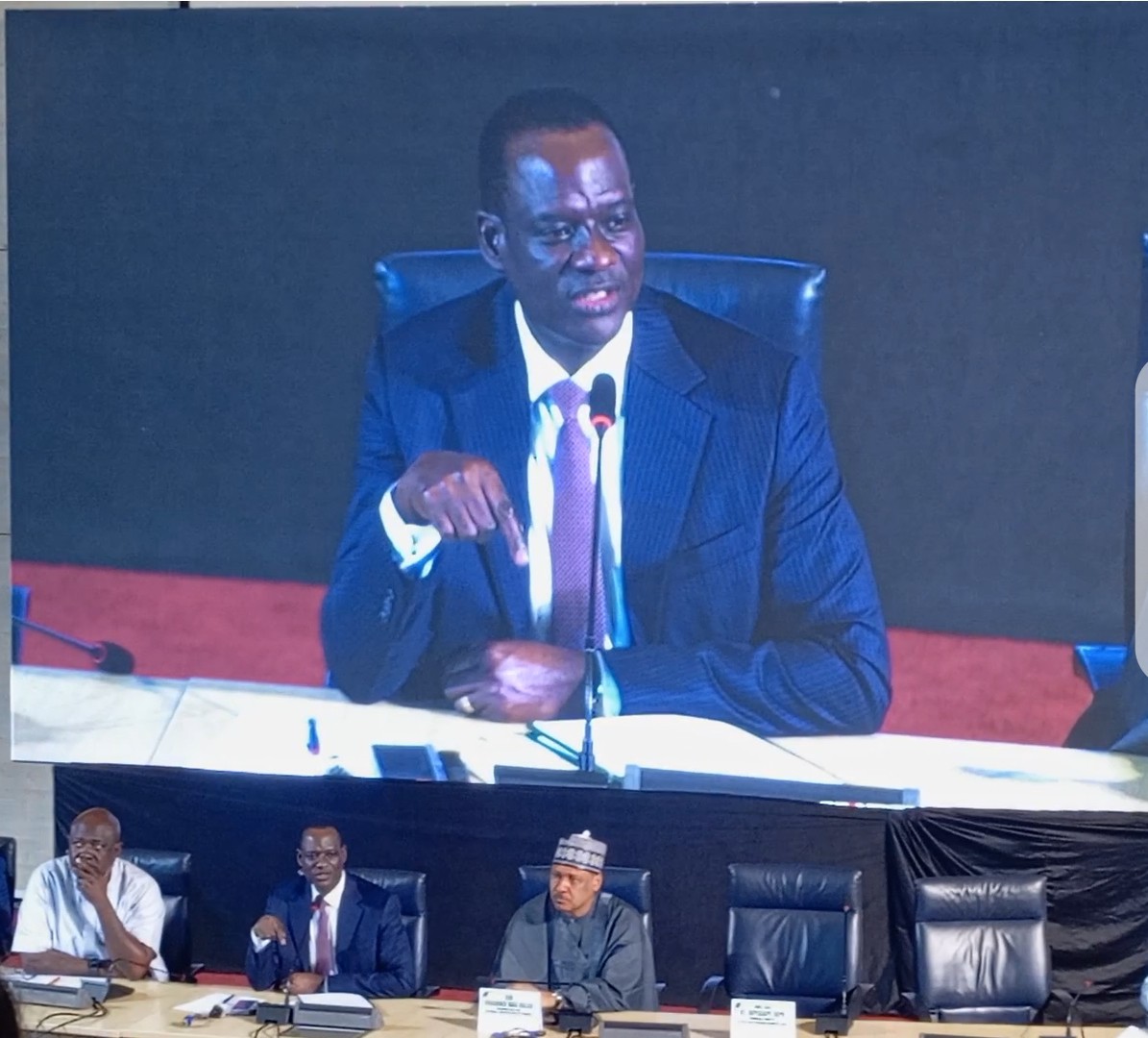
The Federal Government of Nigeria has firmly ruled out any intention to reinstate the petrol subsidy system, issuing a stark warning that returning to such a policy would inflict catastrophic damage on the national economy. Speaking at a press briefing titled “Fuel Prices and the Subsidy Question” in Abuja, the Minister of Finance and Coordinating Minister of the Economy, Professor Taiwo Oyedele, explained that restoring the subsidy would cost Nigeria over N20 trillion annually, trigger a sovereign credit rating downgrade, and drive the exchange rate to N3,000 per dollar. He emphasized that current elevated fuel prices stem entirely from global shocks caused by the ongoing eight-month-old Gulf conflict—which has severely disrupted shipping through the Strait of Hormuz and pushed Brent crude above $100 per barrel—rather than any domestic policy failure.
Illustrating the global scope of the crisis, Oyedele highlighted that Middle Eastern and Russian diesel exports have plunged by 75 percent, sending West African crude tanker rates to record highs and causing dramatic price spikes in nations worldwide, including the United States, the Philippines, Bangladesh, and Zambia. Prior to the war, petrol sold for about N830 per litre in Nigeria, but global pressures have pushed the average price to roughly N1,400 per litre. He argued that without the initial subsidy removal reform, the shock to the domestic market would have been vastly worse, while pointing out that fuel availability across all states throughout the crisis represents the foundational layer of affordability.
Addressing proposals advocating for a “production subsidy” to support local refining, the Finance Minister dismantled the concept as merely a consumption subsidy by another name through four detailed points. First, because crude and refining inputs are priced globally in dollars, forcing naira prices lower creates an exchange rate trap that revives the damaging multiple exchange rate regime. Second, shielding consumers from price volatility shifts immense fiscal risk onto the public balance sheet; returning to pre-reform prices would cost over N20 trillion annually, while even capping prices at N500 per litre would consume N16 trillion—nearly the entirety of the Federation Account shared in 2025.
Third, widening price differentials through subsidies encourages massive cross-border smuggling, effectively forcing Nigerian taxpayers to subsidize motorists in neighboring countries like Benin, Togo, Cameroon, Ghana, Kenya, and South Africa. Fourth, the fiscal benefits of subsidy removal have been substantial, releasing N15.8 trillion to the Federation Account between June 2023 and December 2025, with N10.4 trillion distributed directly to state and local governments. This influx of funds rescued 27 states that were previously unable to pay salaries in May 2023, ensuring that today every state meets its payroll obligations.
Revisiting the subsidy regime, Oyedele warned, would trigger a predictable economic collapse where reduced revenues invite credit downgrades, derail prospective upgrades from rating agencies like S&P, drive up borrowing costs, spur capital flight, and drain foreign exchange reserves. This downward spiral would weaken the currency toward N3,000 per dollar and ultimately push “subsidized” petrol above N2,000 per litre. Challenging proponents of fuel subsidies, he asked three fundamental questions: what it will cost, how it will be sustainably funded, and what final pump price it will deliver, noting that a subsidy merely shifts how and when fuel is paid for rather than lowering its actual cost.
To buffer citizens without returning to blanket subsidies, the government has implemented several sustainable structural interventions. Deregulation has made domestic refining viable and kept supplies steady, while complete tax and duty waivers on fuel save consumers N400 to N600 per litre—equivalent to over N5 trillion in foregone state revenue and placing Nigerian petrol among the 25 cheapest globally. Furthermore, the naira-for-crude framework allows local refiners to purchase raw materials in local currency to ease foreign exchange demand, while macroeconomic stability has narrowed the exchange rate gap to under 5 percent and built reserves up to an 18-year high of $55 billion.
The Federal Government is also driving the adoption of cheaper, cleaner energy alternatives alongside targeted social safety nets. Over 120,000 vehicles have been converted to Compressed Natural Gas (CNG), supported by 400 conversion centers, 96 refueling stations, 18 L-CNG stations, and 550 CNG buses that have cut commuter fares by 30 to 50 percent. Additionally, tax and duty eliminations on electric vehicles and solar energy, coupled with retained subsidies on electricity, gas, and fertilizer, continue to protect vulnerable households and local producers.
Expanding on immediate future measures, Oyedele announced short-term margin discounts at NNPC stations, forward sales of crude to domestic refineries, and a price modulation ceiling of N1,350 per litre on ex-gantry costs to smooth out global market volatility. The government plans to eliminate illegal interstate trade levies, expand cash transfers, enforce an excess profit tax on predatory operators to fund transport vouchers, grant tax relief to low-income earners under the 2027 Finance Bill, and establish a National Strategic Fuel Reserve to safeguard supply security during external disruptions.
Reinforcing the administration’s policy direction, Minister of State for Finance, Heineken Lokpobiri, argued that removing the subsidy saved Nigeria from mirroring the economic ruin of Venezuela, where petrol is artificially cheap but extreme poverty persists despite vast oil reserves. Lokpobiri emphasized that maintaining the government’s role as exclusive importer under a subsidy scheme would have crowded out private investment and prevented world-scale developments like the Dangote Refinery, which is now expanding capacity to 1.4 million barrels per day. He added that market-based pricing is legally mandated under Section 205 of the Petroleum Industry Act (PIA), making any attempt to reinstate subsidies illegal.
Concluding the briefing, leadership reiterated that while the current high cost of fuel presents real hardship to citizens, reversing necessary economic reforms would only recreate the destructive cycle of scarcity, smuggling, currency collapse, and fiscal crisis. Permanent Secretary of the Ministry of Finance, Raymond Omachi, highlighted that the ministry’s broader agenda focuses on transforming from a restrictive gatekeeper into an economic enabler to foster business productivity and predictability. Ultimately, the administration under President Bola Ahmed Tinubu remains committed not to stepping backward, but to ensuring that the long-term gains of economic deregulation reach every Nigerian.
Leave a Reply