
… SOLUTION: HEALING THE NIGERIAN MIND From Emotional Exhaustion to Mental Wellbeing, Resilience and National Flourishing …Healing the Nigerian Mind By Eniola Adeyemi, PhD · Introduction: What Does a Mentally Healthy Nigeria Look Like in Everyday Life? Nigeria is a nation of extraordinary human potential. From its bustling markets and innovative entrepreneurs to its determined students, hardworking families and vibrant communities, the country holds remarkable reserves of creativity, courage and resilience. Yet behind the familiar expressions of strength lies a question that deserves urgent national attention: how emotionally healthy are the people working so hard to keep Nigeria moving? For generations, Nigerians have been celebrated for their ability to survive difficult circumstances. They adapt to economic uncertainty, navigate infrastructural challenges, support extended families and rebuild their lives after setbacks. But survival, however admirable, should never become the highest ambition of a nation. A country must aspire to more than producing citizens who can endure suffering. It must create conditions in which people can experience dignity, emotional security, meaningful relationships, psychological wellbeing and real opportunities to flourish. A mentally healthier Nigeria is not simply a country where fewer people experience depression or anxiety. It is a country where people can live safely, build meaningful relationships, access appropriate healthcare, take part in productive work and plan for the future. Two Households Consider two hypothetical Nigerian households. In the first, a father experiences persistent financial pressure. He becomes irritable, emotionally withdrawn and increasingly impatient with his children. His wife takes responsibility for managing everyone’s emotions while quietly suppressing her own worries. The children gradually stop discussing their difficulties because they fear upsetting their parents. The family remains together physically, but emotional distance begins to grow. In the second household, the family faces similar financial difficulties. However, the parents discuss their concerns respectfully, agree on priorities and reassure their children that the challenges are not their fault. Responsibilities are shared, and the family seeks practical help when it is needed. Neither household can eliminate Nigeria’s economic challenges. Yet the second has developed protective practices that can reduce avoidable conflict, strengthen social support and create a healthier emotional environment. This distinction is the foundation of an important national conversation. Healing the Nigerian mind requires both personal psychological skills and social conditions that make wellbeing possible. Families must learn healthier ways of communicating. Schools must become emotionally safer places. Workplaces must protect psychological wellbeing. Communities must rebuild trust and connection. Above all, national leaders must recognise that the mental wellbeing of citizens is not a peripheral concern. It is a foundation of human development, productivity, social stability and national prosperity. Nigeria does not merely need stronger people. Nigeria needs healthier systems that allow its people to use their strength for flourishing rather than endless survival. 1. Understanding Nigeria’s Emotional Exhaustion When Survival Becomes a Way of Life Emotional exhaustion is a state of psychological depletion that can develop when demands repeatedly exceed a person’s available coping resources. It may involve persistent tiredness, irritability, emotional detachment, difficulty concentrating, reduced motivation and a sense of being overwhelmed. It is not itself a psychiatric diagnosis, although it may occur alongside stress, depression, anxiety, burnout or physical health conditions. For many Nigerians, several sources of pressure operate at the same time: A worker may struggle with transport costs, irregular electricity, demanding employment conditions and family financial obligations. A parent may worry about school fees, food prices, rent, healthcare and their children’s future. A young graduate may face repeated job rejection while relatives press them to become financially independent. A small business owner may spend considerable resources on alternative power supplies while trying to stay competitive. These experiences differ, and not every Nigerian lives them in the same way. Nevertheless, they show how economic and social pressures can accumulate. What Does the Research Tell Us? The World Health Organization’s World Mental Health Report (2022) estimates that approximately one in eight people worldwide were living with a mental disorder in 2019. The report stresses that mental health is shaped not only by individual characteristics but also by social, economic and environmental conditions. Similarly, the WHO and International Labour Organization’s 2022 policy brief on mental health at work estimates that depression and anxiety cause around 12 billion lost working days globally each year, costing roughly US$1 trillion in lost productivity. These are global estimates, not Nigeria-specific figures. Even so, they show why mental wellbeing deserves a place in economic and organisational planning. For Nigeria, the implications are substantial. A psychologically exhausted population may struggle to sustain attention, creativity, healthy relationships and productive participation. But mental distress should never be read as evidence of national weakness or poor character. It may simply reflect the prolonged demands placed on individuals and communities. A Practical Example Imagine a secondary-school teacher who spends several hours travelling to work, manages a large classroom, returns home to domestic responsibilities and worries about unpaid bills. Over time, she begins to experience headaches, irritability and difficulty sleeping. Her colleagues describe her as impatient. Her children complain that she is always angry. Yet few people ask what pressures she is carrying. The appropriate response is not to tell her to be more patient. It is to look at her workload, her access to rest, her social support, her financial pressures and her possible healthcare needs. The lesson: before judging someone’s behaviour, consider the burdens shaping it. 2. The Psychology of Healing: What Nigerians Need to Understand Healing from emotional exhaustion does not mean eliminating every unpleasant emotion. Fear, sadness, anger and frustration are normal human experiences. Psychological wellbeing means learning to recognise emotions, regulate responses, maintain supportive relationships, make meaningful choices and recover from difficulty. Several established psychological frameworks offer useful guidance. A. Psychological Wellbeing: Carol Ryff’s Six Dimensions Psychologist Carol Ryff (1989) identified six dimensions of psychological wellbeing: Self-acceptance Positive relationships with others Autonomy Environmental mastery Purpose in life Personal growth These dimensions remind us that mental wellbeing is broader than happiness. A Nigerian woman who builds healthy boundaries, keeps supportive relationships and pursues meaningful goals can strengthen her wellbeing even while facing economic uncertainty. A young man who learns practical skills, develops self-respect and gains a sense of direction can experience personal growth despite temporary unemployment. At the national level, the dimensions raise important questions: Are citizens able to make meaningful choices? Can young people develop their abilities? ...
Article Category: Earth
Article

Article

Reuben Abati’s remembering Oluremi Oyo
By Bolanle BOLAWOLEturnpot@gmail.com 0705 263 1058 Dr. Reuben Abati’s “Remembering Mrs. Remi Oyo”, which I read online on Oct. 1, 2024, brought back a floodgate of memories regarding Mrs. Oluremi Oyo who passed to glory 10 years ago and whose remembrance her family held recently in Lagos. Remi and I were professional colleagues. Her easy-going...
Article
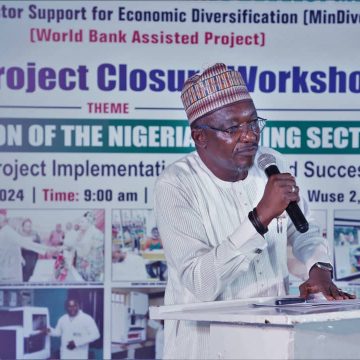
HOW FG BOOSTS INVESTMENTS, JOB CREATIONS, CAPACITY WITH MINDIVER PROJECTS
The Federal Government has affirmed the beneficial fruits emanating from theMineral Sector Support for Economic Diversification (MinDiver), a World Bank funded Project, to include boosting investments, employment opportunities, fostering economic linkages and institutional capacity in the mining sector. The Honourable Minister for Solid Minerals Development; Dr Dele Alake disclosed this during the occasion of MinDiver...
Article

Ex-SMEDAN Boss, Masari Re-Arraigns for Alleged N119m Money Laundering
The Economic and Financial Crimes Commission, EFCC, on Thursday, May 23, 2024, re-arraigned the former Director General of Small and Medium Enterprises Development Agency of Nigeria, SMEDAN, Bature Umar Masari on an amended 22- count charge of alleged money laundering before Justice O.A Egwuatu of the Federal High Court sitting in Maitama, Abuja. Masari’s arraignment...
Article
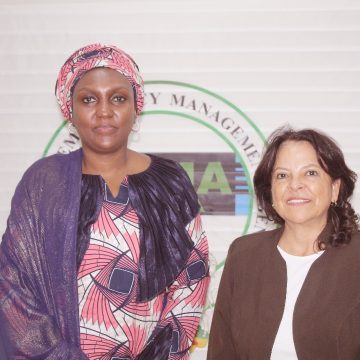
NEMA conducting national hazard risk analysis
The National Emergency Management Agency (NEMA) is undertaking hazard risk analysis for Nigeria with the United Nations Children Educational Fund (UNICEF) to identify and strengthen action towards addressing common disasters in different parts of the country. Director General NEMA Mrs Zubaida Umar and UNICEF Country in Nigeria Ms Cristian Munduate reviewed the progress of the...