

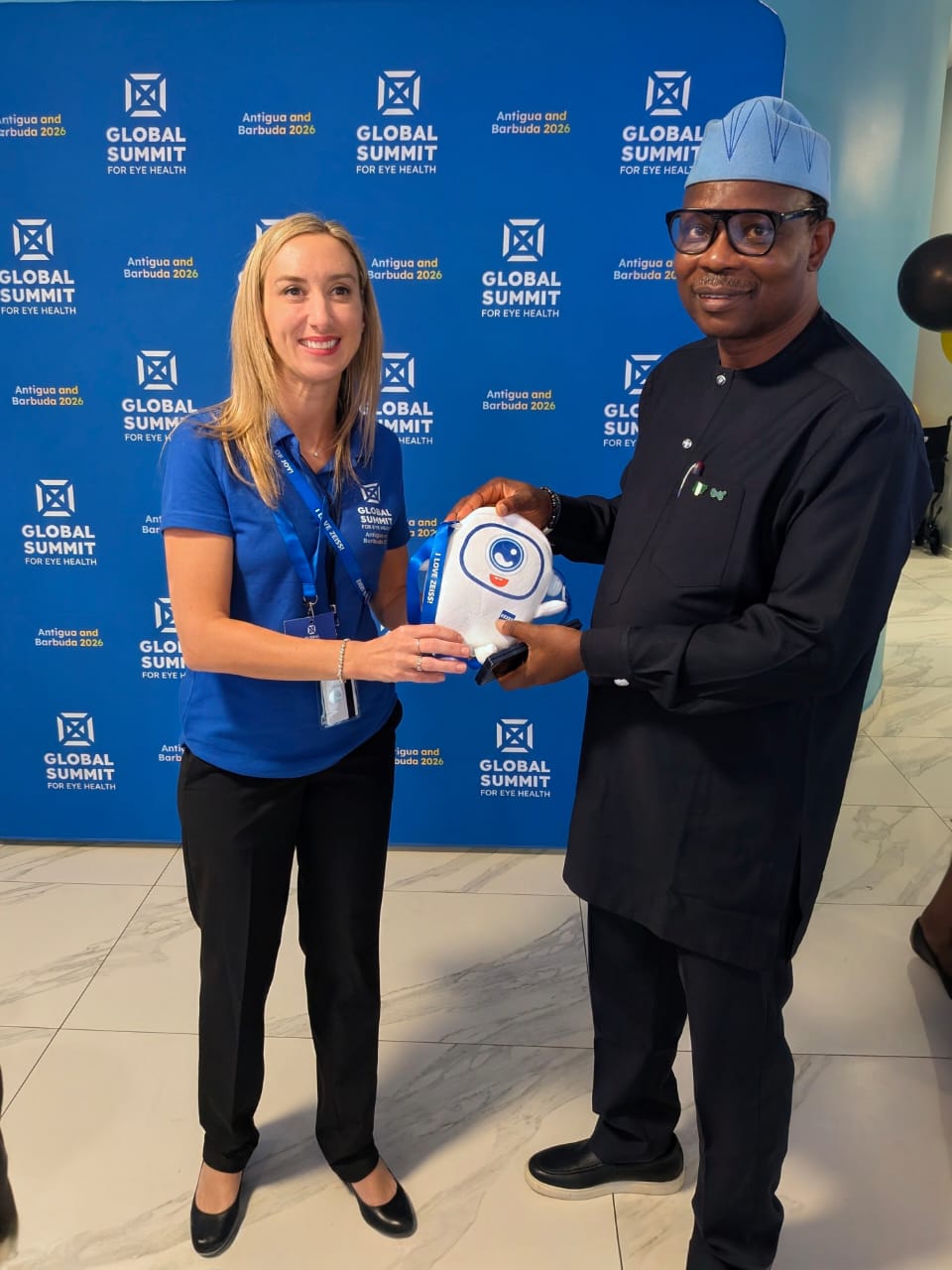
The Federal Government of Nigeria has pledged to eliminate avoidable vision loss and expand access to equitable, affordable eye care for over 25 million vulnerable citizens, particularly women, older adults, and underserved rural populations. The Minister of State for Health and Social Welfare, Dr. Iziaq Adekunle Salako, announced this while delivering the closing address at the Global Summit for Eye Health in St. John’s, Antigua and Barbuda.
Speaking under the summit theme “From Commitments to a Shared Horizon of Sight,” Dr. Salako emphasized that vision care is a fundamental human right and a core driver of social development. He noted that unaddressed vision loss severely impacts education, family welfare, personal safety, and overall national productivity across the country.
On behalf of President Bola Ahmed Tinubu, the Minister outlined actionable targets under Nigeria’s national eye health agenda to be achieved by 2027. Key deliverables include distributing 5 million pairs of ready-made reading spectacles, delivering 25,000 fully subsidized cataract surgeries, training 15,000 primary healthcare personnel, and integrating primary eye care into the Basic Health Care Provision Fund (BHCPF).
Looking further ahead to 2030, Nigeria aims to expand its active eye care workforce by 20 percent and boost Effective Cataract Surgical Coverage (eCSC) by 30 percentage points. The Minister highlighted how early efforts like Lagos State’s 25-year-old JigiBola initiative have now matured into JigiBola 2.0 (the Effective Spectacle Coverage Initiative), proving that successful regional programs can scale into nationwide healthcare strategies.
Nigeria’s vision strategy aligns with international targets through its active participation in the World Health Organization’s Global Cataract Surgery Initiative, known as SEE 2045. Dr. Salako described this initiative as a landmark move in controlling non-communicable eye conditions and reducing preventable blindness globally.
To finance these ambitions, the Minister emphasized the necessity of strong public-private partnerships, sustained domestic funding, and close collaboration with international development partners. He noted that the summit secured substantial momentum, including $60 million pledged toward assistive technology and 15 private-sector commitments exceeding $468 million globally.
Concluding his address, Dr. Salako commended co-host nations, the WHO, and the International Agency for the Prevention of Blindness for driving the global agenda. He urged all international stakeholders to turn policy promises into tangible actions, noting that success will ultimately be measured by the number of lives transformed through restored sight.
Leave a Reply