

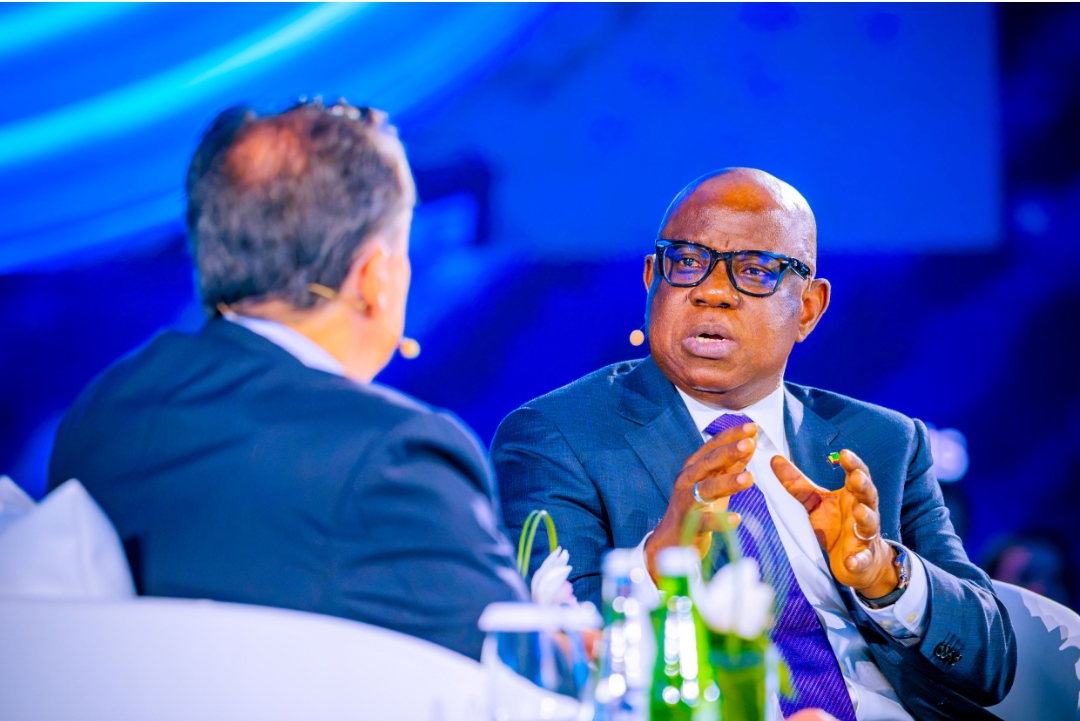
The Nigerian National Petroleum Company Limited (NNPC Limited) has announced a significant boost in Nigeria’s crude oil output, adding 600,000 barrels per day (bpd) to push total national production from 1.2 million bpd to 1.8 million bpd. This growth strengthens the country’s capacity to compete for international energy capital.
Speaking at the 2026 Abu Dhabi International Petroleum Exhibition and Conference (ADIPEC) during a panel titled “Nigeria’s Reform Agenda: Competing for Energy Capital,” Group Chief Executive Officer Engr. Bashir Bayo Ojulari attributed the growth to reforms under the Petroleum Industry Act (PIA, 2021), improved investment conditions, and strong partner collaborations.
Looking ahead, NNPC Limited has set its sights on reaching 2 million bpd by 2027. Ojulari explained that the company is focusing on fundamental operational targets, including maintaining critical infrastructure, protecting base operations, and bringing new production assets online.
On the domestic front, the company noted that the removal of the petrol subsidy is being complemented by a major expansion of Compressed Natural Gas (CNG). Over 400 CNG conversion centers have been set up nationwide, and more than 1,000 petroleum transport trucks are now running on natural gas.
Key infrastructure milestones were also highlighted, including the completion of the Obiafu-Obrikom-Oben (OB3) gas pipeline in August 2026. Additionally, the Ajaokuta-Kaduna-Kano (AKK) pipeline is on track to supply gas to Abuja before the end of the year to power industries, data centers, and power plants.
For long-term gas growth, NNPC Limited is targeting national production of 10 billion standard cubic feet per day (Bcf/d) by 2027 and 12 Bcf/d by 2030. Regional integration is also advancing, with executed agreements for the Nigeria-Morocco Gas Pipeline and alignment among Nigeria, Niger, and Algeria on the Trans-Saharan Gas Pipeline.
Finally, Ojulari emphasized growing international investor confidence, citing roughly $20 billion in commercial agreements for major upstream developments such as TotalEnergies’ Ubeta, Shell’s Bonga South-West, and Eni’s Zabazaba projects, alongside expanding partnerships with ADNOC, Chinese refinery investors, and global oilfield service companies.
Leave a Reply