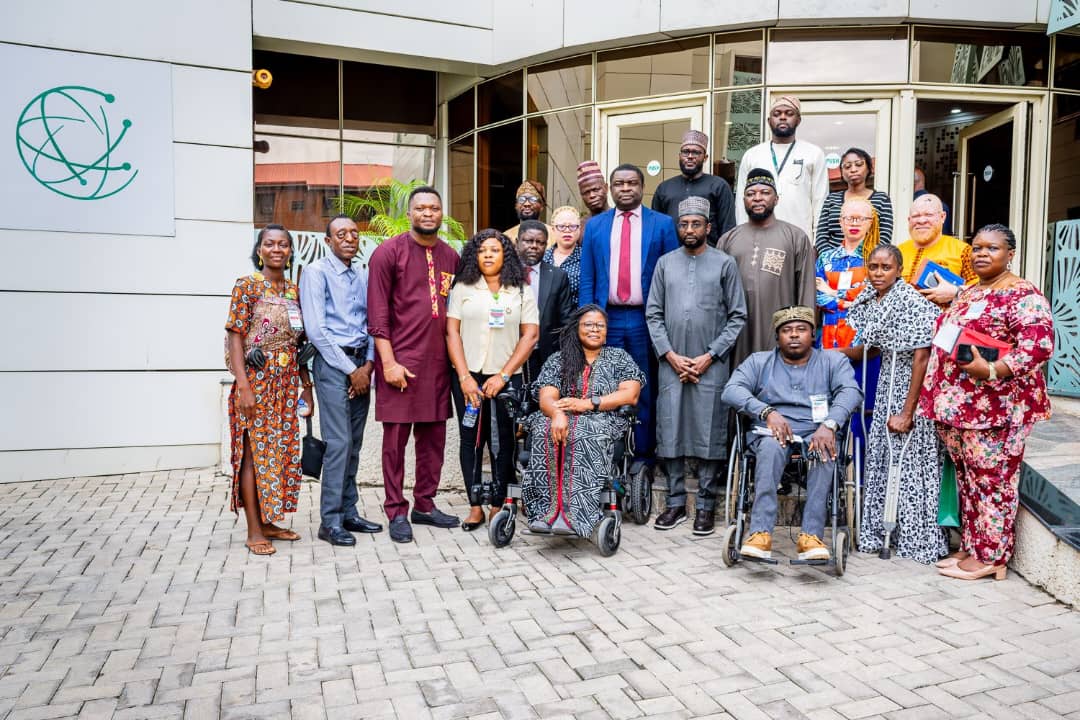
The National Information Technology Development Agency’s (NITDA) Director-General, Mallam Kashifu Abdullahi, has advocated for greater inclusion of individuals with special needs in the organization’s policies and initiatives. Abdullahi recognized the need for deliberate design in the agency’s initiatives to serve the estimated 35 million Nigerians with special needs, aligning his call with the president’s priority of economic reform for sustained inclusive growth. At the agency’s headquarters, Abdullahi spoke to a delegation from the Inclusive Friends Association, a disability advocacy group headed by Grace Jerry, its executive director. He praised the group for bringing attention to the realities of the community. ”This made me realize that we need to be more deliberate in how we create our programs, as we cannot attain 95% digital inclusion if we leave out 35 million Nigerians,” he said. While noting that NITDA has previously conducted targeted training for people with special needs in different parts of the country, the DG pledged a renewed commitment to expanding these initiatives nationwide. “If you look at our office, we have facilities to cater to that, and in our recruitment also, we make sure we consider it. But now, we must go further and make sure our programmes reflect this inclusion,” he assured. Abdullahi proposed the formal inclusion of disability community representatives in national ICT standard-setting committees, curriculum development, and policy formulation. He emphasised that their participation would not only safeguard their interests but also improve implementation by pushing through bureaucratic hurdles. He further suggested integrating special needs considerations into national initiatives such as the NYSC tech programmes, women’s digital training cohorts and upcoming national tech conferences. These platforms, he noted, offer critical opportunities for networking, skills development, and business support. “For us, it’s beyond just training. The real goal is empowerment: how we can train people to use IT to expand their businesses and improve their lives,” he added. Reaffirming the agency’s commitment to strategic collaboration, the DG invited disability organisations to serve as partners in building a digital economy that works for all Nigerians. ”IT is a necessary tool for everything you do. So, let us make sure everyone, regardless of ability, is equipped to use it,” he concluded. Previous to this, Jerry expressed gratitude to the organization for the interaction and pointed out a notable gap in the disability community, especially among women in northern Nigeria. In order to achieve the government’s goal of 95% digital literacy by 2030, she emphasized how urgent it is to make sure that individuals with special needs are fairly represented in continuing evaluations and the framework’s implementation is being closely watched. ”Without intentional inclusion, millions will be left behind as digital literacy quickly becomes a foundational skill for employment,” she cautioned, highlighting the necessity of inclusive policymaking and customized programs.


Leave a Reply