

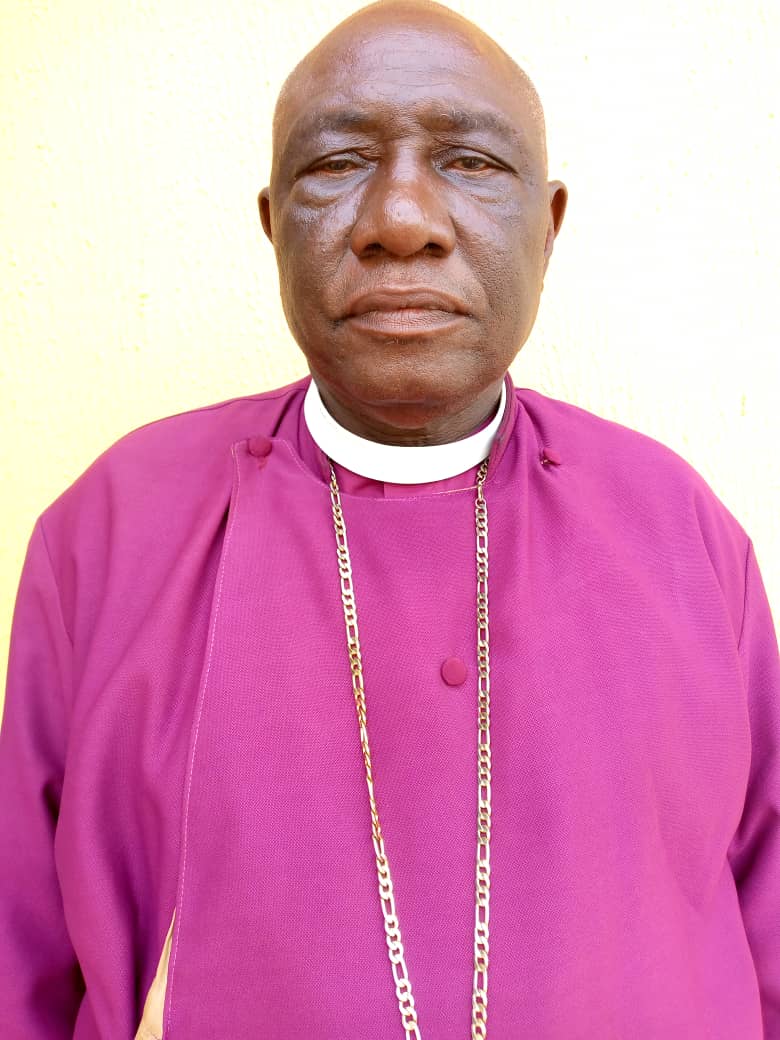
The Archbishop of the Ecclesiastical Province of Kwara and Bishop of the Diocese of New Bussa, Most Rev. Israel Afolabi Amoo, has expressed deep concern over the worsening insecurity, rising poverty and governance challenges confronting Nigeria, urging governments at all levels to take urgent steps to protect lives, create wealth and restore public confidence in leadership.
Amoo made the call in his charge delivered at the Second Session of the Sixth Synod of the Diocese of New Bussa, held at St. John Church, New Bussa, under the theme, “Godly Remnants,” drawn from Isaiah 37:31-32.
The cleric described the state of insecurity across the country as frightening and all-encompassing, noting that no segment of society has been spared from the menace.
According to him, “The challenge of insecurity of lives and property has assumed an alarming frightening proportion in Nigeria to the extent that everybody is worried about it. The target group has cut across the rich, the poor, the unemployed, the employed, institutions, schools and places of worship.”
He lamented that many Nigerians now live in fear due to threats ranging from terrorism and armed robbery to road accidents, flooding, hunger and the circulation of fake drugs.
“Our insecurity is a sad commentary that absolute lawlessness and lack of respect for the sanctity of human life are engaging the attention of Nigerians at a time when we should be thinking and acting in ways that could pave the way for all-round development in the country,” he said.
Amoo warned that the persistent security crisis is discouraging investment and slowing economic growth, stressing that no meaningful development can occur in an atmosphere of violence and instability.
Calling for decisive government action, he urged authorities to adequately equip security agencies and improve the training of personnel to enable them tackle increasingly sophisticated security threats.
“The government must equip the security agencies with the necessary capacity demanded by the situation. These terrorists use sophisticated weapons, resulting in our security personnel being unable to match force with force when occasions for confrontation arise,” he stated.
The Archbishop also advocated peaceful coexistence among Nigeria’s diverse ethnic groups, saying the nation’s diversity should be seen as a strength rather than a source of conflict.
On the economy, Amoo said Nigeria’s abundant human and natural resources have not translated into prosperity for citizens, despite the country’s huge population and economic potential.
He observed that the nation has focused more on cash generation than sustainable wealth creation, resulting in widespread poverty despite growing economic indicators.
“The growth in Gross Domestic Product has not been translated into economic prosperity for citizens. Poverty remains a paradox in a country so blessed with abundant human and natural resources,” he noted.
The cleric urged the Federal Government to pursue aggressive industrialisation, establish industries that utilise local raw materials and create jobs, while also fostering an environment that attracts private investment.
“There must be a deliberate attempt to industrialise the nation. This is the way to add value to our raw materials, provide jobs and improve the living standard of our people,” he said.
He further criticised what he described as a culture among political leaders of focusing on sharing national resources rather than creating new sources of wealth.
“Today, the orientation of most of our leaders is how to share the national cake and not how to bake it,” Amoo remarked.
Speaking on governance, the Archbishop identified corruption, poor infrastructure, inadequate power supply, deteriorating roads, weak healthcare and declining educational standards as major obstacles to national development.
He lamented that appointments and employment opportunities are often not based on merit, a trend he said has encouraged mediocrity and weakened governance structures.
“Appointments and employments are not based on merit. This has led to enthroning mediocrity in governance, resulting in ineffective personnel and an inefficient system of political governance,” he said.
Amoo also decried the state of public services, including the education and health sectors, noting that many public institutions are struggling with poor infrastructure, inadequate funding and declining standards.
To address these challenges, he called for a renewed commitment to good governance built on transparency, accountability, selfless leadership and human capital development.
The Archbishop listed key requirements for effective governance, including value reorientation, servant leadership, improved public service performance, capacity building, poverty reduction and stronger anti-corruption institutions.
“We therefore call on government at all levels to make for good governance that would ensure transparency, accountability, democratic commitment, capacity building and changed value orientation as a panacea to solving the problems of poor performance, poverty and poor service delivery that have bedevilled our country,” he added.
The cleric maintained that only through responsible leadership, improved security and economic diversification can Nigeria achieve sustainable growth and provide a better future for its citizens.
Leave a Reply