Home News Digital Economy

Category: Digital Economy

Post
BEYOND CAPITAL: DG NITDA SAYS AI, REGTECH WILL DEFINE NIGERIA’S BANKING FUTURE

BEYOND CAPITAL: DG NITDA SAYS AI, REGTECH WILL DEFINE NIGERIA’S BANKING FUTURE

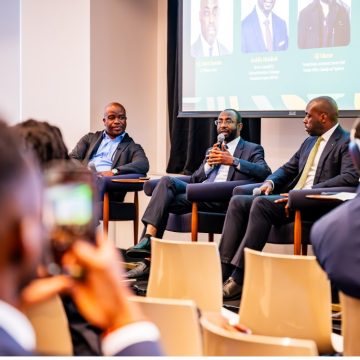
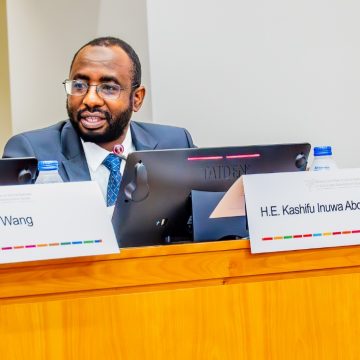
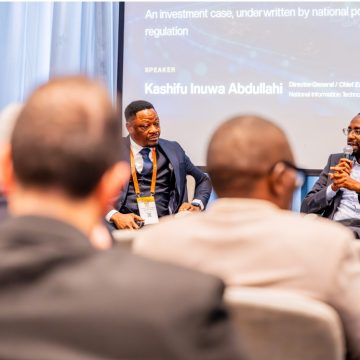
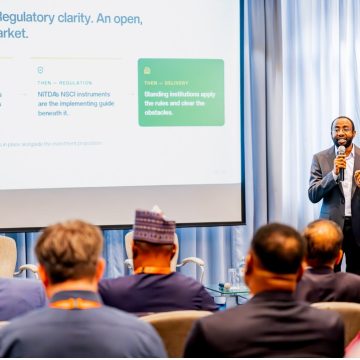
The Director General of the National Information Technology Development Agency (NITDA), Kashifu Inuwa, has said the next phase of growth for Nigeria’s banking sector will be driven less by capital accumulation and more by the ability of financial institutions to build digital trust through artificial intelligence (AI), regulatory technology (RegTech) and cyber resilience.  Speaking during a panel session titled “The Efficiency Frontier – AI, RegTech and Cyber Resilience” at the Future of Banking Nigeria Summit organised by CNBC Africa in Lagos, Inuwa argued that while Nigeria’s banking industry has successfully weathered major reforms over the past two decades, the emerging threats confronting the sector require a different approach.  He noted that the industry has repeatedly demonstrated resilience through landmark milestones such as the 2005 banking consolidation, the 2009 banking reforms and the ongoing recapitalisation exercise. According to him, the priority has now shifted from simply raising capital to ensuring that such capital is protected and sustained in an increasingly digital economy.  “Today’s question is no longer whether we can raise capital, but whether we can protect, preserve and grow that capital in the digital era. Trust has become the foundation of modern banking, and that trust must be built on resilient digital infrastructure and effective regulation,” he said.  Inuwa observed that digital channels have become the primary point of interaction between banks and customers, making technology resilience, cybersecurity and uninterrupted service delivery essential to maintaining public confidence in the financial system.  He described artificial intelligence as a strategic tool capable of transforming banking operations by improving productivity, strengthening decision-making, boosting revenue and delivering personalised financial services that reflect the expectations of digitally connected customers.  The DG also highlighted the growing importance of regulatory technology, saying its adoption can simplify compliance, lower operational costs, improve transparency and strengthen governance across financial institutions.  According to him, effective regulation must evolve alongside innovation. He explained that NITDA combines formal regulatory instruments with collaborative, innovation-friendly approaches that allow emerging technologies to develop while regulators establish appropriate standards and safeguards.  “Technology evolves much faster than traditional regulation. Regulators must work closely with innovators to create enabling frameworks that encourage innovation while protecting consumers and maintaining market confidence,” he said.  Using Nigeria’s thriving fintech ecosystem as an example, Inuwa said technology has fundamentally changed the delivery of financial services by enabling customers to open accounts, access banking products and carry out transactions remotely without visiting physical branches.  He further called for closer collaboration among regulators to improve access to finance for Small and Medium-sized Enterprises (SMEs). He explained that AI-powered credit assessment and digital financial management tools can help financial institutions better understand business performance, reduce lending risks and expand credit to underserved enterprises.  On responsible AI adoption, Inuwa disclosed that NITDA’s National Artificial Intelligence Strategy provides a framework for deploying AI across critical sectors in partnership with sector regulators, including the Central Bank of Nigeria (CBN) for financial services.  He added that the Agency is also developing National Standards for Sovereign Cloud infrastructure and data classification to strengthen Nigeria’s digital sovereignty and ensure that sensitive national and financial data remain adequately protected.  Inuwa concluded that deeper collaboration among regulators, technology innovators and financial institutions will be critical to building a secure, resilient and globally competitive financial ecosystem that supports sustainable economic growth.  46 Views

Post
FIRST LADY COMMISSIONS IT ACADEMY, CLINIC, OTHERPROJECTS IN HADEJIA

FIRST LADY COMMISSIONS IT ACADEMY, CLINIC, OTHERPROJECTS IN HADEJIA

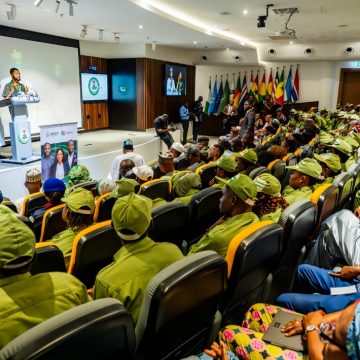
Nigeria’s First Lady, Senator Oluremi Tinubu, on Monday commissioned the President Bola Ahmed Tinubu Academy, alongside a modern clinic and dialysis centre named in her honour, describing the projects as “clear evidence of the government’s commitment to improving infrastructure, expanding access to quality healthcare, and investing in the future of the young.”  The commissioning took place in Hadejia, Jigawa State, where Senator Tinubu emphasised that the state-of-the-art clinic would bring “relief and hope to many patients and their families in Hadejia, neighbouring communities, and beyond.”  She added that the academy represents President Tinubu’s dedication to human capital development and educational excellence, which secures “a better tomorrow” for Nigeria’s children.  In addition to the health and education projects, Senator Tinubu also launched the National Food Bank Programme, a deliberate and sustainable response to food insecurity and malnutrition among vulnerable households. The initiative is designed to ensure that children under six, pregnant women, and lactating mothers have access to nutritious food, directly advancing President Tinubu’s Renewed Hope Agenda on food security and improved health outcomes.  The programme is being implemented through a strategic partnership between the Office of the First Lady, the Federal Ministry of Health and Social Welfare, the National Primary Health Care Development Agency, and the Bank of Agriculture. According to Senator Tinubu, the initiative will “build a stronger and more prosperous Nigeria” by safeguarding the health and future of its most vulnerable citizens.  The clinic and dialysis centre were built and fully equipped by FutureMap Foundation and eHealth Africa, in honour of the First Lady’s passion for uplifting underserved communities and vulnerable people.  The President Bola Ahmed Tinubu Academy was established with the support of His Excellency President Bola Ahmed Tinubu GCFR and the National Information Technology Development Agency (NITDA), underscoring the administration’s commitment to innovation and education.  Both projects are designed to work hand in hand. The academy, with its fabrication laboratory and advanced learning facilities, will support the clinic by developing prototypes of body organs — especially kidneys — to aid research, early detection, and prevention of chronic kidney disease. This synergy ensures that education directly fuels healthcare innovation, creating practical solutions to pressing medical challenges.  The First Lady, who expressed deep appreciation to the NITDA Director-General for the honour, re-emphasised the benefits of the academy and the clinic saying: “We are grateful for these honours done to us. Thank you. These projects are clear evidence of the state and federal government’s commitment to improving infrastructure, expanding access to quality healthcare, and investing in education and the future of young people.”  The First Lady further highlighted that the Bola Ahmed Tinubu Academy represents the President’s commitment to human capital development and educational excellence. She added, “By investing in the education of our children today, we are securing a better tomorrow for them.”   While speaking on the National Food Bank Programme, the First Lady described it as “a deliberate and sustainable response to food insecurity and malnutrition among vulnerable households in Nigeria.”   She stressed that the initiative is designed to ensure that children under the age of six, pregnant women, and lactating mothers have access to nutritious food, adding that “this programme aligns with the Renewed Hope Agenda of His Excellency President Bola Ahmed Tinubu, advancing food security, improving healthcare outcomes, and building a stronger and more prosperous Nigeria.”  She explained that the programme is being implemented through a strategic partnership between the Office of the First Lady, the Federal Ministry of Health and Social Welfare, the National Primary Health Care Development Agency, and the Bank of Agriculture.   Recalling its rollout, she noted that, “We have launched the National Community Food Trust Fund and inaugurated the Board of Trustees in Abuja on 2 April 2026. On 27 April, we conducted the first launch in Borno State for the North-East Zone, and today, by the grace of God, we are launching the second National Community Food Bank here in Jigawa State for the North-West Zone.”  Commending the swift implementation in Borno, she observed that the programme has already enrolled 560 beneficiaries and reached 468 vulnerable children, pregnant women, and lactating mothers in less than two months. “This impressive achievement gives me confidence that Jigawa State will set even higher standards for others to follow,” she declared.   The First Lady emphasised that Jigawa’s agrarian potential makes it a strategic choice for the North-West launch and called for “sustained collaboration to build a transparent, accountable, and efficient food bank system that reaches vulnerable households across Nigeria.”  Earlier in his remarks, the Jigawa State Governor, Mallam Umar A. Namadi, expressed deep appreciation to Senator Oluremi Tinubu and all distinguished guests, noting that their presence in the state for the North-West launch of the National Community Food Bank Programme was “a strong demonstration of solidarity with families who need support and a reaffirmation of our shared duty to protect the vulnerable segment of our population.”  He emphasised that the event served as a reminder of the duty at the heart of public service — ensuring that every child’s health, survival, and development are safeguarded.  Governor Namadi described the initiative as “a timely intervention that will not only bring food resources closer to the people who need them most but will also contribute to better nutrition indices among our children.”   He acknowledged the vision and compassion of the First Lady, stressing that the food bank programme addresses both immediate needs and the long-term well-being of children. He added that the programme provides a platform for nutrition and support to vulnerable households through partnerships with community leaders, farmers, civil society organisations, and the private sector.  Linking the initiative to constitutional responsibility, the Governor cited Section 16, Subsection 2 of Nigeria’s Constitution, which mandates the government to provide “suitable and adequate food for all citizens.”   He commended President Bola Ahmed Tinubu for fulfilling this responsibility through national food security and food bank programmes. He further explained that Jigawa State had already established strong policy foundations through its State Food and Nutrition Policy and State Social Protection Policy, which support targeted nutrition assistance for mothers and children. According to him, the food bank initiative “strongly complements our existing commitments, serving as an effective mechanism for delivering direct benefits to vulnerable families.”  Highlighting progress already made, Governor Namadi pointed to Jigawa’s homegrown nutrition programme implemented across 300 communities, which screened over 240,000 children in 2024 and 382,000 in 2025. He noted that the programme successfully transformed thousands of children from moderate acute malnutrition to healthy status, while 600 women were trained to produce locally made nutritious formulas such as Tom Brown.  He assured that North-West governors would give the food bank programme the support it deserves, pledging to provide storage and distribution facilities, strengthen food centres, and ensure transparency and accountability in reaching vulnerable households. “A nutritious meal for a pregnant woman can safeguard two lives, and nutritious food for a child can support learning and growth,” he said, calling for diligence and compassion from all stakeholders to ensure lasting impact.  The newly commissioned projects in Hadejia, especially the President Bola Ahmed Academy and the Senator Oluremi Tinubu Clinic represent a deliberate effort to integrate advanced technological innovation with critical healthcare delivery. The Academy is structured as a sustainability-oriented institution, designed to transform technical knowledge into practical community solutions.   Its infrastructure includes a fabrication laboratory and maker space for prototyping health wearables and prosthetics, an innovation lab with AI-driven tutoring, and a pitch space for start-ups and research ideas. Complementary spaces such as the atrium, auditorium, and residential hostel ensure that the academy functions not only as a training ground but also as a hub for collaboration, digital upskilling, and community engagement.  The clinic serves as the healthcare counterpart to the academy’s innovation ecosystem. It houses a dedicated dialysis centre to address the region’s burden of chronic kidney disease, alongside a fully equipped operating theatre and maternity rooms for safe maternal care. Every ward is integrated with continuous piped oxygen, ensuring readiness for respiratory emergencies, while the facility’s reliance on renewable energy systems guarantees uninterrupted power for critical medical equipment. This design reflects a strong emphasis on resilience, sustainability, and accessibility, bringing life-saving services closer to underserved communities.  Together, the academy and clinic form a symbiotic model in which education and healthcare reinforce each other. The academy’s fabrication laboratory is expected to provide diagnostic tools and organ prototypes, while the clinic applies these innovations in real-world patient care. This collaboration offers a pathway for early detection and prevention of chronic illnesses, particularly kidney disease, while also strengthening Nigeria’s broader health technology ecosystem. The integration of infrastructure, innovation, and medical service delivery positions Hadejia as a potential model for how technology and healthcare can be combined to address pressing community needs.  It may be recalled that last week, the President launched the establishment of the National Health Technology and Data Analytics Office, a move expected to strengthen Nigeria’s capacity for medical research, data-driven healthcare delivery, and the integration of technology into public health systems.  The event was attended by all seven governors from the North-West geopolitical zone and their spouses; the Minister of State for the Federal Capital Territory (FCT), Hajiya Mariya Mahmoud Bunkure; the Minister of State for Education, Professor Suwaiba Sa’id Ahmad; and the Director-General of the National Primary Health Care Development Agency (NPHCDA), Dr Muyi Aina, who represented the Coordinating Minister of Health and Social Welfare, Professor Muhammad Ali Pate. Also present were the NITDA Director-General Kashifu as well as other government functionaries and traditional rulers.  40 Views

Post
NITDA, META DEEPEN PARTNERSHIP TO ADVANCE YOUTH ONLINE SAFETY, DIGITAL TRUST

NITDA, META DEEPEN PARTNERSHIP TO ADVANCE YOUTH ONLINE SAFETY, DIGITAL TRUST

The National Information Technology Development Agency (NITDA) has reaffirmed its commitment to strengthening youth online safety and digital literacy through strategic collaboration with Meta, as part of broader efforts to build a digitally inclusive economy and enhance trust in Nigeria’s digital ecosystem.  This commitment was reiterated by the Director General of NITDA, Kashifu Inuwa, CCIE, during the Youth Safety Summit organised by Meta at the Transcorp Hilton Hotel, Abuja.   The Summit convened stakeholders from government, industry, civil society organisations, and the education sector to advance collaborative efforts aimed at ensuring young Nigerians enjoy safe, age-appropriate, and positive online experiences.  A major highlight of the event was the launch of the Youth Online Safety Campaign and My Digital World (MDW) 2.0, initiatives developed by Meta in partnership with NITDA and the Federal Ministry of Youth Development.  Represented by the Acting Director of Digital Literacy and Capacity Building Department, Dr Ahmed Tambuwal, the NITDA DG noted that the Agency’s collaboration with Meta aligns strongly with President Bola Ahmed Tinubu’s Renewed Hope Agenda, particularly the priority areas of Reforming the Economy for Sustained Inclusive Growth and Strengthening National Security through robust cybersecurity measures that enhance digital trust and confidence.  He explained that building a digitally skilled population capable of safely navigating the online environment is fundamental to unlocking innovation, entrepreneurship, job creation, and economic opportunities in the digital age.  Speaking on the significance of the Summit’s theme, “Advancing Youth Online Safety Through Collaborative Action,” Inuwa stressed that protecting young people online requires collective responsibility from all stakeholders.  “Today’s theme is both timely and compelling. It reminds us that while digital technologies have created unprecedented opportunities for learning, innovation, entrepreneurship, and social connection, ensuring that young people can benefit from these opportunities safely is a shared responsibility,” he said.  The DG emphasised that digital literacy cannot be separated from online safety, noting that the ability to use digital tools must be accompanied by the knowledge and skills needed to navigate the digital space responsibly.  “At NITDA, we believe that digital literacy and online safety are inseparable. Equipping citizens with digital skills without teaching them how to navigate the digital world safely, responsibly, and ethically would leave our work incomplete,” he stated.  According to him, this philosophy is embedded in NITDA’s National Digital Literacy Framework (NDLF) and the Agency’s flagship Digital Literacy for All (DL4ALL) initiative, through which it aims to achieve 70 per cent digital literacy by 2027 and 95 per cent by 2030.  He further disclosed that online safety, digital citizenship, privacy, digital wellbeing, critical thinking, and Artificial Intelligence (AI) literacy have become core competencies within the framework.  “Within this framework, online safety, digital citizenship, privacy, digital wellbeing, critical thinking and, increasingly, Artificial Intelligence literacy are treated not as optional topics, but as essential competencies for every Nigerian,“ he noted.  The DG highlighted the growing partnership between NITDA and Meta, describing it as a model for effective public-private collaboration in driving Nigeria’s digital transformation agenda.  Over the past year, both organisations jointly implemented the Youth Online Safety and Wellbeing Campaign, which reached more than 94 million people and generated over 216 million impressions across Facebook and Instagram. The campaign provided millions of Nigerians with practical guidance on online safety, privacy protection, digital wellbeing, and responsible internet use.  The partnership also extended to activities marking Safer Internet Day, where members of the National Youth Service Corps (NYSC) were engaged and empowered to become advocates of responsible digital behaviour within their communities. More recently, both organisations reaffirmed their commitment to advancing Nigeria’s digital economy through innovation and inclusion at the Nigeria Digital Economy Forum.  While expressing optimism about the launch of My Digital World 2.0 and describing it as a strategic platform, Inuwa said, “We believe MDW 2.0 presents an excellent opportunity to institutionalise online safety education within Nigeria’s broader digital literacy ecosystem.”  He revealed that NITDA intends to integrate the programme into its teacher capacity-building initiatives, strengthen the resources available to its nationwide network of Digital Literacy Champions, and expand awareness campaigns through partnerships with state governments, traditional institutions, faith-based organisations, and community stakeholders.  According to him, ensuring children’s safety online requires more than secure platforms; it requires informed families, empowered educators, and digitally aware communities.  “Our shared ambition should be to ensure that every Nigerian child is supported not only by safer digital platforms, but also by informed parents, empowered teachers, and digitally confident communities,” he remarked.  Describing the launch as a significant step forward, Inuwa said the initiative marks the beginning of a deeper partnership between government and industry aimed at preparing a new generation of Nigerians for the digital future.  “Today’s launch is more than the unveiling of another programme. It is the beginning of a deeper strategic collaboration between government and industry to build a generation of Nigerians who are digitally skilled, digitally responsible, and digitally resilient,“ he stated.  He reaffirmed NITDA’s commitment to working with Meta and other stakeholders to build a secure and inclusive digital ecosystem where innovation thrives, opportunities are accessible to all, and every Nigerian can participate confidently in the digital economy.  Also present at the event were the Minister of Youth Development, Comrade Ayodele Olawande, and the Minister of Women Affairs, Mrs Imaan Sulaiman-Ibrahim. Both ministers reaffirmed their ministries’ commitment to collaborating with relevant stakeholders to develop and implement policies that foster a safe, inclusive, and enabling digital environment, particularly for young Nigerians, to navigate the internet responsibly and securely.  38 Views

Post
NITDA Leads Push for Responsible AI Adoption as Nigeria Moves from Policy to Progress

NITDA Leads Push for Responsible AI Adoption as Nigeria Moves from Policy to Progress

Abuja — The National Information Technology Development Agency (NITDA) has reaffirmed its commitment to establishing Nigeria as a frontrunner in Africa’s artificial intelligence economy, emphasizing that the country’s digital future relies heavily on responsible AI adoption, digital sovereignty, and homegrown innovation.  Speaking at the AI Summit Nigeria 2026—hosted by Microsoft in Abuja—NITDA’s Director-General, Kashifu Inuwa CCIE, described AI as a transformative force capable of revolutionising every economic sector. His insights were delivered by Barr. Emmanuel Edet, NITDA’s Acting Director of Regulation and Compliance, who highlighted that trust serves as the bedrock for any sustainable AI rollout. Without a firm commitment to accountability and transparency, he warned, widespread innovation simply cannot scale.  “Without public trust, AI adoption will be stalled,” Inuwa noted. “Without accountability, innovation will not scale sustainably, and without transparency, citizens will lose confidence in the systems designed to serve them.”  Themed “From Policy to Progress: Accelerating Responsible AI Adoption for Nigeria’s Digital Decade,” the summit was a collaborative effort between Microsoft, NITDA, and MTN. The event brought together a diverse group of public and private sector stakeholders to map out actionable strategies for embedding AI into the fabric of Nigeria’s economy.  A central theme of Inuwa’s address was the critical need for Nigeria to achieve true digital sovereignty. He urged the nation to pivot from being mere consumers of global technology to becoming active creators of it.  “We must become creators of intelligence rooted in our realities and responsive to our aspirations,” Inuwa urged. “We must build local talent, strengthen research ecosystems and create an enabling environment where Nigerian and African solutions can thrive.” He added that Africa needs to play a defining role in shaping the global future of AI, rather than just adapting to technologies built elsewhere.  Microsoft’s Director of Government Affairs for West Africa, Nonye Ujam, also spoke at the event, praising Nigeria’s proactive steps in AI governance, particularly through the National AI Strategy and ongoing regulatory reforms. However, she challenged attendees to move past the paperwork and focus on executing AI solutions that yield measurable benefits for everyday citizens, businesses, and government operations.  Ujam pointed out that truly effective AI adoption hinges on robust governance frameworks, solid infrastructure, and institutional capacity, all while anchoring new innovations to the core principles of fairness, security, transparency, and accountability.  The summit sparked vital conversations around regulatory clarity, digital sovereignty, and the delicate balance between fostering innovation, driving collaboration, and maintaining strategic control over Nigeria’s fast-evolving tech landscape. The event drew active participation from key institutions, including the Nigeria Customs Service, the National Identity Management Commission, and Galaxy Backbone, all signaling a unified front for Nigeria’s digital future.  59 Views

Post
Driving SME Growth: NITDA and TikTok Launch Digital Commerce Training

Driving SME Growth: NITDA and TikTok Launch Digital Commerce Training

In a major push to deepen digital inclusion and spark economic growth, the National Information Technology Development Agency (NITDA) has officially joined forces with global entertainment platform TikTok. The strategic partnership was unveiled during the launch of the TikTok Digital Commerce Labs Programme for SMEs in Lagos. This initiative aims to equip Nigerian Small and...

Post
NCC Initiates Statutory Review of Mobile Termination Rates to Align Interconnection Regime with Macroeconomic Realities

NCC Initiates Statutory Review of Mobile Termination Rates to Align Interconnection Regime with Macroeconomic Realities

The Nigerian Communications Commission (NCC) has officially commenced a comprehensive regulatory review of Mobile Termination Rates (MTR), signifying the first major reassessment of the nation’s wholesale telecommunications pricing framework since 2018. Formally launched during an industry consultative forum in Lagos themed “Understanding Mobile Termination Rates,” this statutory exercise aims to realign interconnection pricing with prevailing...

Post
Benue Tech Boost: First Lady Unveils NITDA ICT Centre, Expanding Digital Access

Benue Tech Boost: First Lady Unveils NITDA ICT Centre, Expanding Digital Access

​ The Federal Government’s drive for nationwide digital inclusion achieved a significant milestone with the official commissioning of the National Information Technology Development Agency (NITDA) Community IT Centre in Ihugh, Vandeikya Local Government Area of Benue State. Nigeria’s First Lady, Senator Oluremi Tinubu, unveiled the new facility, describing it as a strategic investment in human...

Post
EFCC Ekiti Zonal Office Inauguration Signals Stronger Anti-Corruption Drive – Shettima

EFCC Ekiti Zonal Office Inauguration Signals Stronger Anti-Corruption Drive – Shettima

Vice President Senator Kashim Shettima has said the commissioning of the new Economic and Financial Crimes Commission (EFCC) zonal office in Ado-Ekiti marks a significant boost to Nigeria’s anti-corruption efforts and the Federal Government’s Renewed Hope agenda. Shettima, who spoke on Tuesday during the inauguration of the EFCC Ekiti Zonal Directorate complex along Old Iyin...

Translate »