

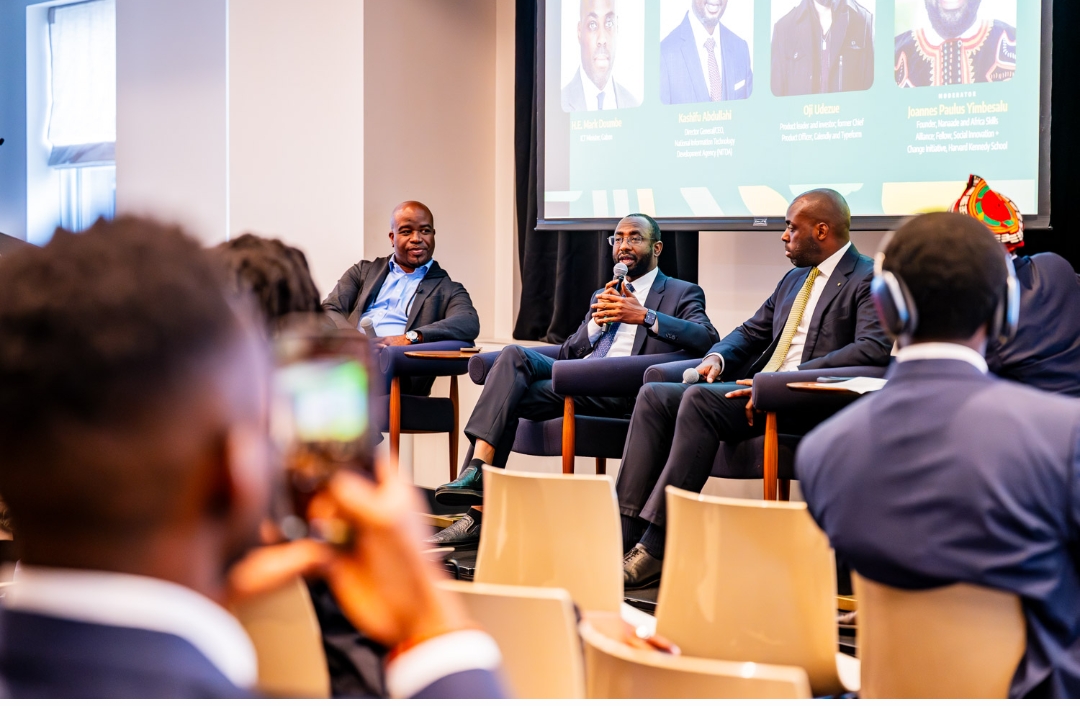
At a high-level panel session titled “Scaling Africa’s Digital Workforce” during the 81st United Nations General Assembly (UNGA81) side event, “Nigeria at Scale: Building Digital Systems for Shared Prosperity,” Kashifu Inuwa Abdullahi, Director-General and CEO of the National Information Technology Development Agency (NITDA), issued a compelling call to action. Joining H.E. Mark Doumba, Gabon’s ICT Minister, and investor Oji Udezue in a session moderated by Joannes Paulus Yimbesalu, Abdullahi urged policymakers and ecosystem leaders to shift their primary focus from merely counting training statistics to ensuring those skills translate into productive enterprise, income generation, and improved livelihoods.
Asserting that stakeholders have successfully industrialized training without properly industrializing the transition to work, the NITDA chief identified three fundamental barriers stifling young African talents. First is the “trust gate,” where employers find it difficult to verify candidates’ actual capabilities; second is the “platform and connectivity gate,” where deficits in devices, reliable power, affordable internet, and opportunity channels restrict active participation; and third is the “demand gate,” characterized by a severe imbalance where job seekers vastly outnumber available formal employment roles.
In response to these systemic hurdles, Nigeria’s Federal Ministry of Communications, Innovation and Digital Economy, alongside NITDA, is executing an integrated digital transformation strategy that directly aligns skills acquisition with infrastructure expansion and job creation. Key initiatives include the 3 Million Technical Talent (3MTT) programme—which has already trained over 143,000 fellows across three cohorts—and a dedicated Talent Registry engineered to seamlessly bridge verified technical skills directly with potential employers.
To ensure this digital talent pool extends beyond major urban centers, NITDA highlighted Project BRIDGE, an ambitious national infrastructure campaign designed to deploy at least 90,000 kilometers of open-access fiber. By expanding Nigeria’s national backbone to approximately 125,000 kilometers across all 774 Local Government Areas, this initiative aims to deliver essential connectivity to thousands of schools, healthcare facilities, and local government hubs, empowering talent nationwide to participate in the global digital economy.
Central to Abdullahi’s discourse was the critical distinction between foundational digital literacy and advanced digital employability, both anchored in NITDA’s Strategic Roadmap and Action Plan (SRAP 2.0). While basic literacy initiatives equip every citizen with the essential capability to navigate the digital world safely, advanced tracks like 3MTT prepare youth for high-value technical careers in artificial intelligence, machine learning, data science, software engineering, cloud computing, and cybersecurity.
Emphasizing that Africa’s strategy must look beyond standard corporate employment, the Director-General stressed that digital inclusion must empower informal entrepreneurs—such as traders, artisans, farmers, mechanics, and food vendors. For this critical demographic, digital literacy should deliver practical everyday utility, enabling them to accept digital payments, utilize productive smartphone capabilities, leverage AI and social media tools, manage digital records, guard against online fraud, and expand their overall customer reach.
Concluding his address, Abdullahi urged global leaders to shift financial support toward the vital corridor linking education directly to income generation, rather than simply funding more classrooms. For NITDA, the ultimate measure of success extends far beyond issuing certificates; it resides in closing the gap to first-paid work, raising overall economic productivity, and empowering Nigerians to translate digital capabilities into sustainable enterprises and higher earnings.
Leave a Reply