

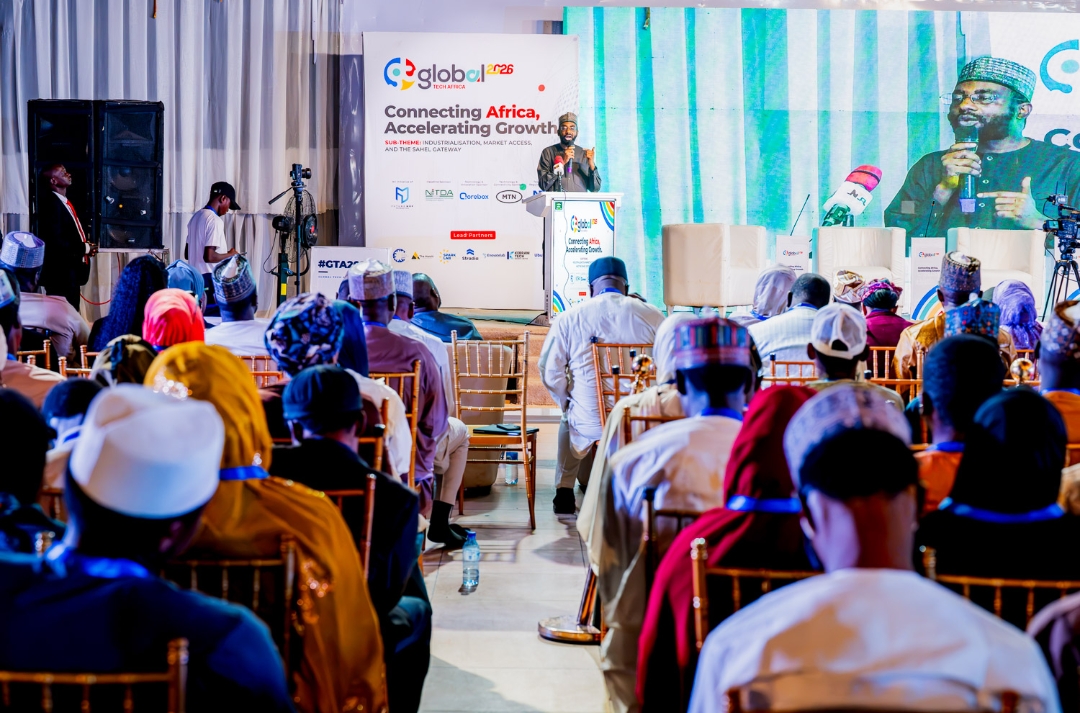
The administration of President Bola Ahmed Tinubu is advancing Nigeria’s digital economy through strategic investments in digital skills development, technology talent, innovation financing, broadband connectivity, and emerging technologies. Speaking at the Global Tech Africa event in Kano, themed “Connecting Africa, Accelerating Growth,” the Director-General of the National Information Technology Development Agency (NITDA), Kashifu Inuwa Abdullahi, outlined the Federal Government’s initiatives to build indigenous tech capacity and position Nigeria as Africa’s premier digital hub.
Emphasizing human capital as the foundation of economic transformation, the administration has introduced major interventions to prepare citizens for a tech-driven economy. Key among these are the Three Million Technical Talent (3MTT) programme and the Digital Literacy for All (DL4ALL) initiative. To ensure long-term sustainability, the government is also integrating digital skills into formal education from kindergarten through tertiary institutions, aiming to achieve 95 percent digital literacy nationwide by 2030.
Inuwa stressed that true digital transformation extends beyond simply providing smartphones and internet access to fostering a complete pipeline from literacy to technology adoption and national prosperity. By leveraging digital tools, citizens, businesses, and traders can boost operational efficiency, cut costs, expand market access, and drive tangible economic value.
To power startup growth and entrepreneurial innovation, NITDA is partnering with the Japan International Cooperation Agency (JICA) and the Nigeria Sovereign Investment Authority (NSIA) to launch six distinct funds, alongside support from the Bank of Industry. Inuwa emphasized that private-sector participation is critical, calling on private investors to contribute not only capital, but also equity partnerships, corporate governance, and strategic leadership to scale local startups.
On the infrastructure front, the Federal Government’s agenda centers on expanding broadband connectivity by laying nationwide fiber-optic networks across all 774 Local Government Areas, the 36 states, and the Federal Capital Territory. To complement this expanded access, NITDA launched the National Sovereign Cloud Initiative to build domestic computing capacity, protect digital sovereignty, and ensure locally generated data is processed and stored securely within the country.
Viewing data centers as the essential “refineries” of the digital age, Inuwa argued that Nigeria must own and manage these critical assets to reduce reliance on foreign infrastructure and become the primary computing hub for West and Central Africa. He also addressed artificial intelligence, warning that Africa currently accounts for less than two percent of global AI training data and urging local development of Large Language Models (LLMs) that accurately reflect Nigeria’s languages, cultures, and socioeconomic context.
Finally, Inuwa highlighted Kano State as a key example of digital economic revitalization, urging stakeholders to use digital platforms, modern trade practices, and the African Continental Free Trade Area (AfCFTA) to restore the state’s historic role as a major Sahelian commercial center. While e-commerce has shifted traditional trading patterns, he maintained that Kano can reclaim its commercial influence by strategically leveraging technology to connect North Africa and the Middle East with sub-Saharan Africa.
Leave a Reply