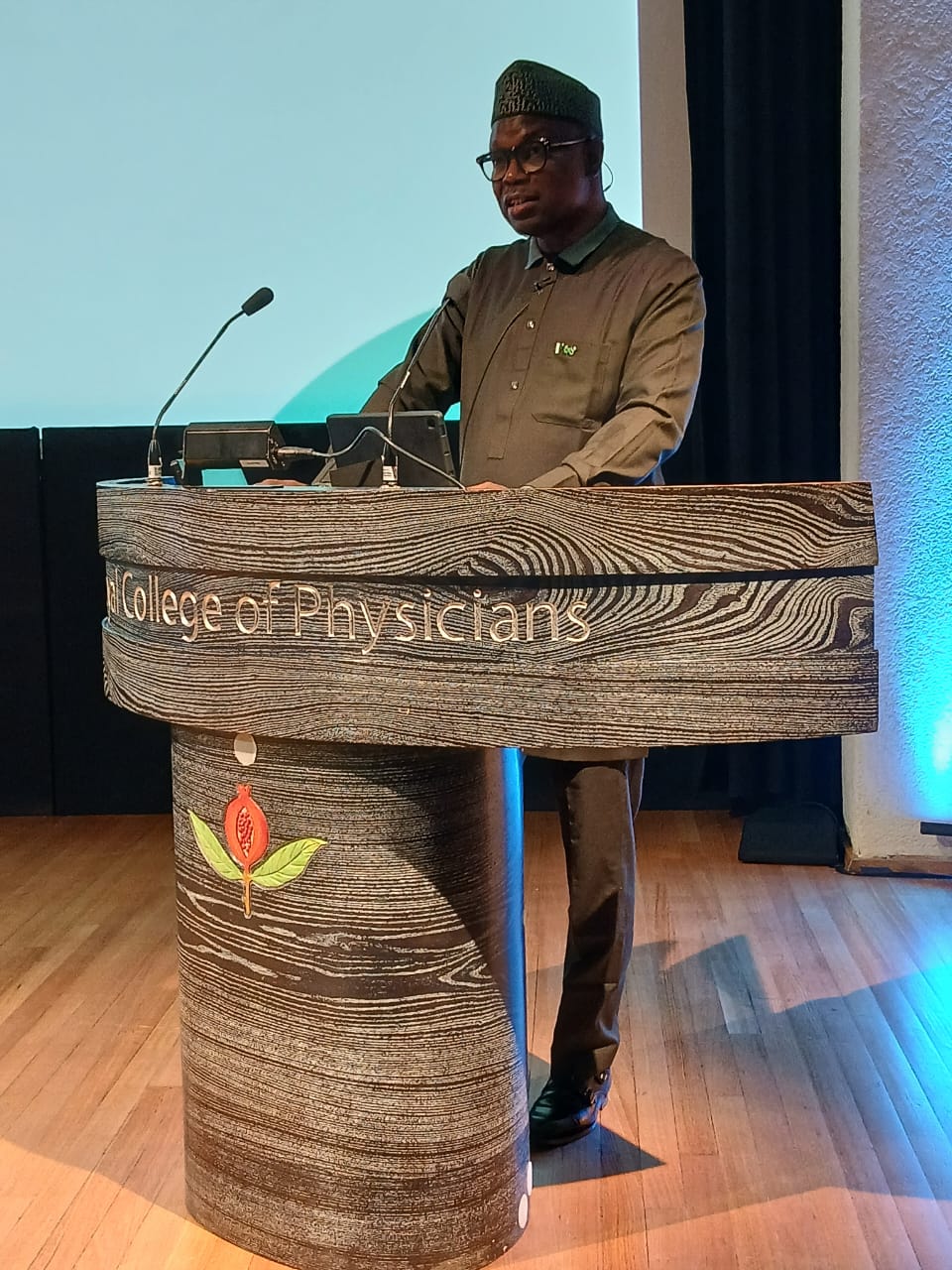
The Minister of State for Health and Social Welfare, Dr. Iziaq Adekunle Salako, has called for a radical restructuring of global health strategies, urging the international community to move away from “unsustainable” models of medical migration. Speaking at the 2026 UK Global Health Summit at the Royal College of Physicians, Dr. Salako delivered a keynote address titled “Shaping Tomorrow’s Health, Together.” He argued that the current trend, where high-income nations reap the benefits of medical professionals trained at the expense of low-income countries, is neither just nor sustainable. Dr. Salako highlighted that at least 150,000 Nigerian health professionals are currently working abroad. He described this group as a massive “reservoir” of skill, capital, and innovation that must be formally integrated into both Nigerian and global health frameworks. To manage this, the Minister proposed a “Managed Migration Agreement.” This new compact would including; Bilateral Compensation: Financial or structural redress for source countries losing staff, Circular Migration: Pathways that allow doctors to gain experience abroad and return home with enhanced skills, Infrastructure Investment: Support from destination countries to build training facilities in the countries of origin. Addressing the “push factors” that drive migration, Dr. Salako detailed the aggressive reforms under President Bola Ahmed Tinubu’s administration. Notable achievements between 2023 and late 2025 including; A 160% increase in medical school admissions, Scaled-up training for nurses, pharmacists, and laboratory scientists, Improved welfare and training conditions for resident doctors. The introduction of “task-shifting” models to empower community health workers and pharmacy technicians. On the financial front, Dr. Salako admitted that while Nigeria has recommitted to the Abuja Declaration—which mandates 15% of national budgets be allocated to health—the target remains a challenge for many African nations. He called on international partners to move beyond traditional aid and toward “predictable and flexible” assistance, suggesting the use of health bonds, blended finance, and public-private partnerships to modernize digital health and infrastructure. ”The interdependence the pandemic revealed is not a weakness; it is a truth,” Salako stated. “No nation can solve the global health workforce crisis alone.” The Minister concluded by advocating for a restructured global research ecosystem. He insisted that the perspectives and intellectual contributions of low- and middle-income countries (LMICs) must be central to health innovation, rather than an afterthought. ”Let us shape tomorrow’s health with the courage to confront uncomfortable truths,” Dr. Salako urged. “Every life, wherever it is lived, is of equal and immeasurable worth.”


Leave a Reply