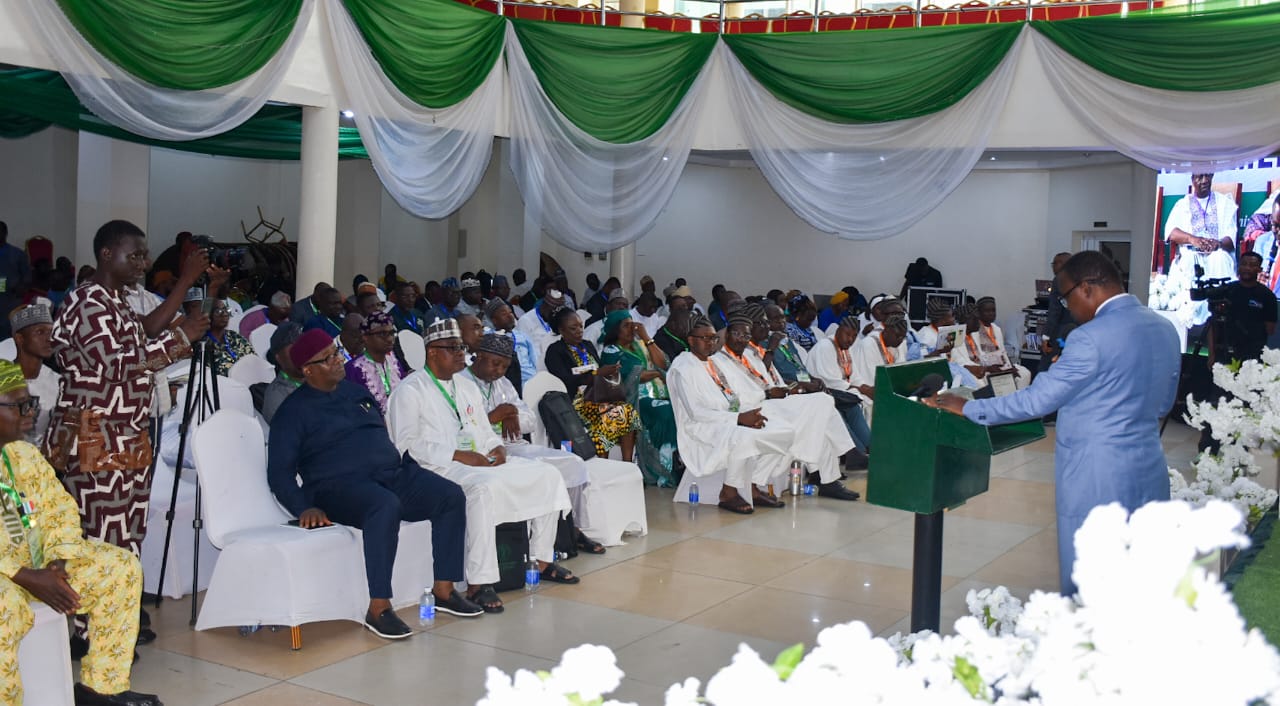
Abuja. Wednesday, 26 August 2026: The Honourable Minister of State for Health and Social Welfare, Dr. Iziaq Adekunle Salako, has called on Nigerian doctors and other health professionals to strengthen professional discipline, accountability, ethical conduct and collaboration as essential pillars for transforming Nigeria’s health system. Dr. Salako made the call while delivering the Guest of Honour Address at the opening ceremony of the National Executive Council (NEC) Meeting of the Nigerian Medical Association (NMA), held at the Conference Hall of Barcelona Hotel, Wuse II, Abuja, with the theme, ”Transforming Healthcare Practice in Nigeria: Building Trust, Accountability and Collaborative Excellence” The Minister, who described himself as both a member of government and a practising medical doctor, said the theme of the NMA meeting was particularly relevant to the current efforts to reform Nigeria’s health sector. According to him, trust in healthcare must be earned through consistent professional conduct, measurable performance and accountability to patients, colleagues, employers and the wider public. “Trust is not a speech; it is a record,” Dr. Salako said. Highlighting the Federal Government’s efforts under the Nigeria Health Sector Renewal Investment Initiative and its Compact with the 36 States and the Federal Capital Territory, Salako noted that implementation of key indicators under the Compact stood at 84 per cent following the 2025 Joint Annual Review, while 35 States and the FCT had completed their Joint Annual Reviews and Performance Dialogues. He also highlighted increased health-sector financing, noting that the health sector’s share of the national budget had risen to 5.2 per cent, while the Basic Health Care Provision Fund (BHCPF) increased from ₦131.5 billion in 2024 to ₦299 billion in 2026. The Minister said the investments were producing measurable outcomes, including direct financing for more than 8,000 primary healthcare facilities, the upgrading of nearly 4,000 PHCs and increased utilisation of Fund-supported facilities. Dr. Salako further disclosed that under the Maternal Mortality Reduction Innovation Initiative, the 172 highest-burden Local Government Areas recorded a 17 per cent reduction in maternal deaths and a 12 per cent reduction in newborn deaths. He added that more than 48,000 women had received free emergency obstetric care, over 4,000 free Caesarean sections had been performed in NHIA-empanelled facilities, while more than 4,700 women had received free vesico-vaginal fistula repairs across 207 facilities. On health workforce development, the Minister said over 37,000 workers had been recruited into Federal tertiary hospitals since 2024, with approximately 75 per cent in the clinical cadre. He also noted that special allowances for health workers had been increased, incentives including the Medical Residency Training Fund were being implemented, and annual medical school admission quotas had been doubled from approximately 5,000 to 10,000. According to him, ₦110 billion had also been committed through TETFund for the rehabilitation of 18 medical, dental, pharmacy and nursing training institutions, while the National Policy on Health Workforce Migration had been adopted to provide a structured response to health-worker migration. The Minister acknowledged the Federal Government’s continuing engagement with doctors and other health professionals on welfare and workplace concerns, citing the 4 August 2026 meeting with the leadership of the National Association of Resident Doctors (NARD). He assured the NMA that the government would continue to engage constructively with the Association and its affiliates, while urging the profession to reciprocate with a strong commitment to ethical practice and patient-centred care. Dr. Salako, however, challenged the medical profession to recognise that “trust is a two-way covenant” stressing that patients experience the health system not through budgetary allocations but through their actual encounters with healthcare professionals. He urged the NMA to treat professional conduct as a strategic asset, warning that absenteeism, informal payments, diversion of public patients to private facilities and other unethical practices could undermine public confidence in the health system. “Every naira we invest in the health sector can become discounted by those encounters if the highest sense of duty is not exhibited,” he said. On accountability, the Minister said the Federal Government was deliberately strengthening systems that make performance measurable and public, including the Sector-Wide Approach, Joint Annual Reviews and Performance Dialogues, direct facility financing, and the deployment of National Health Fellows and Public Financial Management Officers across the 774 Local Government Areas. He disclosed that the Ministry was also implementing a Ministerial Oversight Committee for the BHCPF involving subnational governments, development partners, civil society and the private sector, while the Ministry had voluntarily invited the Independent Corrupt Practices and Other Related Offences Commission (ICPC) to participate in its monitoring mechanisms. Dr. Salako called on the medical profession to embrace stronger clinical governance, including effective mortality and morbidity reviews, honest maternal and perinatal death surveillance, monitoring of waiting times and consultant availability, and credible disciplinary processes. The Minister disclosed that the National Agency for Food and Drug Administration and Control (NAFDAC), in one of the largest enforcement operations in its history, had screened more than 7,000 shops and removed 87 truckloads of falsified, banned and expired medical products valued at about ₦1 trillion from open drug markets in Aba, Onitsha and Lagos. On combating quackery, Dr. Salako urged doctors to play a leading role, and called for the establishment of a standing joint anti-quackery mechanism involving the Ministry, the NMA, the Medical and Dental Council of Nigeria (MDCN), NAFDAC and security agencies, with NMA state branches serving as a critical surveillance layer. More so, on the recent social media reports alleging an organ-harvesting syndicate operating in parts of the FCT, Dr. Salako said the Federal Ministry of Health and Social Welfare was paying close attention to the matter. He disclosed that the National Tertiary Health Institutions Standard Committee had developed National Standards and Guidelines for Organ/Tissue Transplantation, which require informed consent from donors and recipients, facility certification and prohibit commercialisation. The Minister said relevant agencies and parastatals had been directed to support the Nigeria Police in investigating the allegations and establishing the facts. Addressing the issue of task-shifting and task-sharing, Dr. Salako stressed that the Federal Government’s policy was designed to expand access to care while maintaining patient safety. The Minister also called on professional groups to resolve scope-of-practice disagreements through institutional and regulatory mechanisms rather than through media confrontations or industrial actions that could compromise patient care. He proposed a reciprocal set of commitments between government and the NMA, saying that government should be held accountable for honouring its commitments and the collective bargaining process, sustaining the upward trajectory of health financing, protecting health workers at their duty posts through appropriate legislation, expanding training capacity while maintaining accreditation standards, and ensuring that the NMA has a meaningful voice in health workforce and scope-of-practice decisions. In return, he urged the NMA to strengthen institutional discipline against unethical conduct, ensure that industrial action remains a genuine last resort with emergency services protected, lead anti-quackery efforts at state and local levels, and promote inter- and intra-professional respect and ethical conduct. Dr. Salako emphasised that healthcare transformation could not be achieved by government alone, nor against the wishes of doctors and other health professionals. “We can go on measuring each other’s failures with great precision, or we can be measured together by the only indicator that matters: whether the Nigerian who walks into a health facility tomorrow is treated with dignity, gets the care he requires without being impoverished, walks out alive and better than when he walked in,” he said. While declaring the meeting open, the Minister commended the President of the NMA, Dr. (Prof.) Afekhide Ernest Omoti, the National Officers Committee, the Local Organising Committee and Nigerian doctors for their contributions to healthcare development, and finally wished NEC meeting, successful deliberations.


Leave a Reply