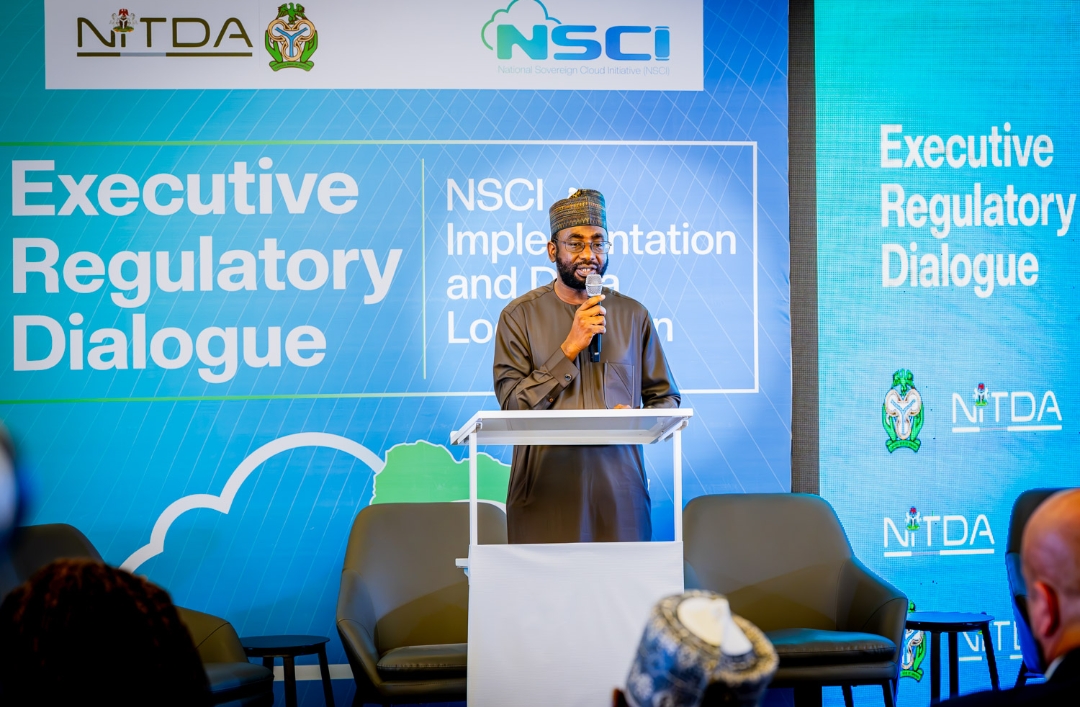
The National Information Technology Development Agency (NITDA) and the Central Bank of Nigeria (CBN) have reaffirmed their joint commitment to securing Nigeria’s digital sovereignty and safeguarding its critical economic infrastructure. Speaking at the Executive Regulatory Dialogue in Lekki, Lagos, NITDA Director General Kashifu Inuwa emphasized that implementing the National Sovereign Cloud Initiative (NSCI) and data localization policies is vital to national economic security. The event convened key leaders across telecommunications, finance, data centers, and technology to devise unified strategies for strengthening national control over essential digital architecture. Setting the context for the dialogue, Inuwa cautioned against the systemic risks of relying heavily on foreign-hosted digital infrastructure for local financial operations. He urged stakeholders to consider the severe economic fallout if geopolitical crises or external disruptions were to block Nigerian banks from accessing offshore servers. The DG stressed that digital sovereignty does not mean isolating the nation or building every technology from scratch, but rather expanding domestic capacity to make independent, strategic decisions about the critical tools and standards underpinning the Nigerian economy. To ensure a seamless transition, NITDA and the CBN are positioning the financial services sector as the pioneer for NSCI compliance. Inuwa recalled how the CBN’s previous cashless policy catalyzed local innovation, paving the way for Nigeria’s thriving fintech ecosystem. Building on that foundation, NITDA is providing the overarching policy framework and standards, supported by an assurance model that leverages recognized international certification standards alongside new national sovereign architecture requirements to give institutions flexibility and prevent vendor lock-in. Underpinning the urgency for local cloud infrastructure is the need to make core financial operations resilient against external technological failures or physical disruptions, such as submarine cable cuts. Inuwa asserted that a robust domestic sovereign cloud will guarantee data portability, enhance risk management, and safeguard the payment system from automatic shutdowns during global internet disruptions. He reassured participants that the Nigerian tech ecosystem possesses the proven capacity and expertise to support this national goal without compromising service delivery. Delivering the keynote address, CBN Deputy Governor for Financial System Stability, Mr. Lamido Abubakar Yuguda, pledged the central bank’s full support for the NSCI and data localization mandates. Yuguda highlighted that the rapid rise of digital payments and mobile banking makes securing critical financial data a top priority for national stability. He urged financial institutions to bolster their cybersecurity, disaster recovery, and risk management frameworks to comply with data localization rules well ahead of the established January 1, 2027, deadline for critical payment transaction data. Presenting pre-event survey findings, Dr. Muhammad Aminu Lawal, Special Assistant to the NITDA DG on Policy, revealed that 79 percent of surveyed domestic digital infrastructure providers report immediate readiness to accommodate additional financial-sector workloads. Furthermore, 74 percent indicated they could onboard new financial institutions within three months. However, the survey also noted that broader infrastructure expansions planned through 2027 face headwinds from foreign exchange fluctuations, high financing costs, and power supply challenges, calling for phased implementation milestones and clear written regulatory guidance. Dr. Lawal concluded that resolving regulatory ambiguities and outlining transparent exception processes will be essential to mitigating transition risks for financial institutions. Both regulators emphasized that the ultimate goal of the NSCI is to build a modern, secure, and competitive digital financial ecosystem that protects national sovereignty without isolating Nigeria from global technological advancements. Through continued collaboration among regulators, telecom operators, and local data centers, Nigeria aims to construct a highly resilient infrastructure capable of maintaining public confidence and driving long-term economic prosperity.


Leave a Reply