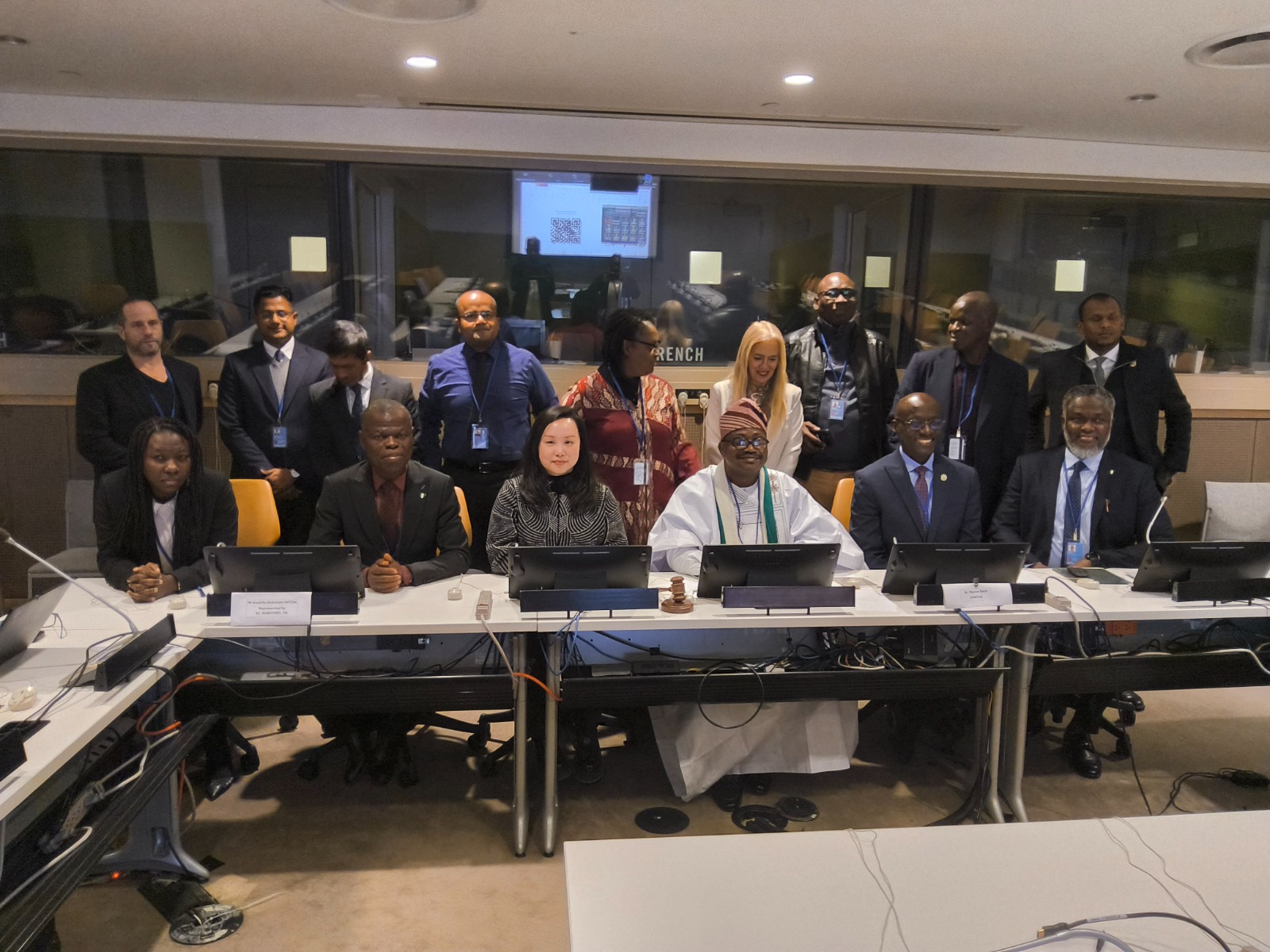
Nigeria has asserted its role as a primary architect of Africa’s digital future with the unveiling of a comprehensive strategy to localize the World Summit on the Information Society (WSIS+20) Launched at a high-level side event in New York titled “Re-Imagining Digital Cooperation for Sustainable Development,” the roadmap outlines a multi-pronged approach to infrastructure, governance, and security designed to translate global visions into measurable national progress. Representing the Director-General of NITDA, Kashifu Inuwa, CCIE, the Director of Corporate Planning and Strategy, Dr. Dimie Shively Wariowei, emphasized that robust infrastructure is the bedrock of this localization effort. To address persistent gaps in rural connectivity and affordability, Nigeria is leveraging a Public-Private Partnership (PPP) model. Key highlights include: The 90,000km Fiber Project: In collaboration with the World Bank, Nigeria is deploying a massive fiber-optic network to ensure high-speed internet reaches underserved communities. National Broadband Plan 2.0: With the current plan nearing completion, a renewed five-year strategy is being developed to aggressively scale broadband penetration and stimulate economic growth. Governance and Cybersecurity: A Multi-Stakeholder Approach Inuwa highlighted that Nigeria’s digital transformation is not a government-only venture. Through the Internet Governance Forum (IGF), the country has successfully fostered a model where the private sector, civil society, and technical communities co-create policy. On the security front, the administration is prioritizing the protection of its digital borders: Legislative Reform: A reviewed Cybersecurity Act is currently awaiting parliamentary approval to provide a stronger legal framework for the digital economy. Enhanced measures are being deployed to protect users and critical national infrastructure from evolving cyber threats. A Blueprint for Africa and the Global South The strategy received significant praise from international observers. Ms. Jennifer Chung, Co-Convener of the Informal Multi-Stakeholder Sounding Board (IMSB), commended Nigeria’s “broad-based” delegation and its commitment to tracking progress toward the UN 2030 Agenda and Africa’s Agenda 2063. Chung noted that Nigeria’s challenges—such as affordable connectivity and AI readiness—are mirrored across the Global South. She described Nigeria’s inclusive approach as a “vital blueprint” for other developing nations striving to ensure no region is left behind in the race toward quantum technologies and artificial intelligence. The WSIS+20 localization strategy cements Nigeria’s ambition to lead digital cooperation across the continent. By focusing on reliable, country-specific data collection and sustained regional engagement, Nigeria aims to ensure that international digital resolutions result in tangible, life-changing impacts for its citizens. Moving from the “Big Picture” (New York launch) to “Specific Actions” (Fiber project/Cybersecurity) to “Global Validation” (Stakeholder praise). Action-Oriented Language: Uses words like spearhead, cement, leverage, and accelerate to convey momentum. Readability: Uses bullet points for technical details, allowing the reader to scan for key statistics like the 90,000km fiber project.


Leave a Reply