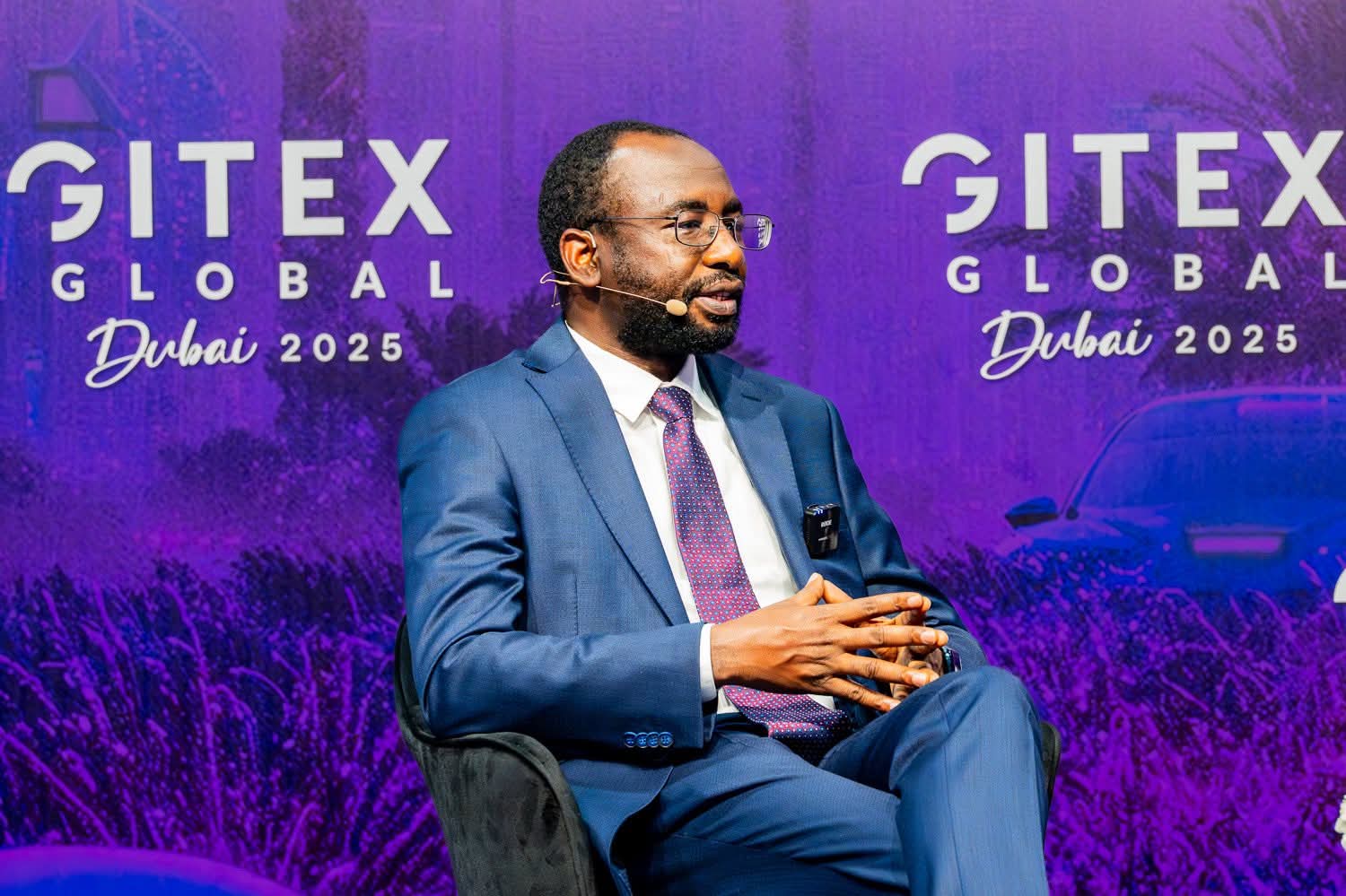
During a Fireside Chat at the AI Stage of the Gulf Information Technology Exhibition (GITEX) 2025 in Dubai, Kashifu Inuwa Abdullahi, CCIE, Director General of the National Information Technology Development Agency (NITDA), reaffirmed Nigeria’s commitment to using artificial intelligence (AI) for innovation, national development, and global competitiveness. Inuwa emphasized that Nigeria is taking a purposeful and strategic approach to implementing AI in her remarks on the topic of the nation’s AI journey. “Our vision is clear on how we can harness the transformative power of AI through responsible, ethical, and inclusive innovation to foster sustainable development through collaboration,” he said. Nigeria’s AI strategy, according to Inuwa, is based on five guiding principles: accountability, ethics, inclusivity, sustainability, and teamwork. He asserts that “these are our compass, not just words.” These principles must guide all of our AI efforts. We are not just building systems; we are shaping a future that works for everyone.” He described the National AI Strategy’s three main goals and five strategic pillars, which are meant to establish the necessary infrastructure, fortify the ecosystem, speed up adoption in vital industries, encourage ethical and responsible AI, and guarantee efficient governance. Inuwa emphasized how AI is influencing many industries, pointing out that it is already transforming the fields of finance, healthcare, education, and agriculture. Using real-time data on soil, weather, and crop health, we are assisting farmers in making well-informed decisions in the agricultural sector. In healthcare, AI is enabling faster diagnosis and extending services to rural areas. To ensure that our youth are not left behind, we are integrating AI literacy into formal education. Additionally, he stated that artificial intelligence (AI) tools are advancing financial inclusion, enhancing credit availability, and detecting fraud. He added that the Nigerian government is looking into AI applications to enhance public services and that he sees a day when citizens can obtain passports or business permits in a matter of minutes rather than weeks. “AI can help make that a reality. We see it as an opportunity to rebuild trust between government and citizens by making public services smarter, faster, and more transparent,” he added. According to Inuwa, Nigeria’s youthful population and proactive investment in digital talent are the reasons why 70% of its online population already uses generative AI tools, which is higher than the global average of 48%. He mentioned flagship programs like the Digital Literacy for All (DL4ALL) program, which aims to achieve 95% national digital literacy by 2030; the 3 Million Technical Talent (3MTT) program, which is one of the biggest digital upskilling initiatives globally; and a new policy that integrates digital literacy into all educational levels. The NITDA boss also unveiled Nigeria’s plan to develop its indigenous Large Language Model (LLM), known as M-ATLAS. “Nigeria has over 500 languages and countless dialects. If we rely only on foreign AI models, they won’t understand our nuances, culture, or people. That is why we are building M-ATLAS, an indigenous LLM that reflects our diversity and eliminates bias. We want an AI that understands the meaning of ‘akwa’, ‘ekaabo’, or ‘sannu,’ not just translates them,” he said. Inuwa compared Africa’s technological advancement in mobile adoption to the continent’s potential, claiming that Africa could outperform it in artificial intelligence. This time, we are building from the inside out and influencing the rules rather than catching up to them. “AI is not about machines replacing humans; it is about amplifying human potential. It is strategy first, technology second. Using AI responsibly to promote sustainability, inclusivity, and prosperity is our mission. If AI is implemented properly, Nigeria’s productivity and innovation could increase tenfold or even 100fold. That is the future we’re building,” he concluded.


Leave a Reply