

The Kwara State Government has intensified efforts to transform its growing youth population into a catalyst for economic growth and sustainable development through a strengthened partnership with the United Nations Population Fund (UNFPA).
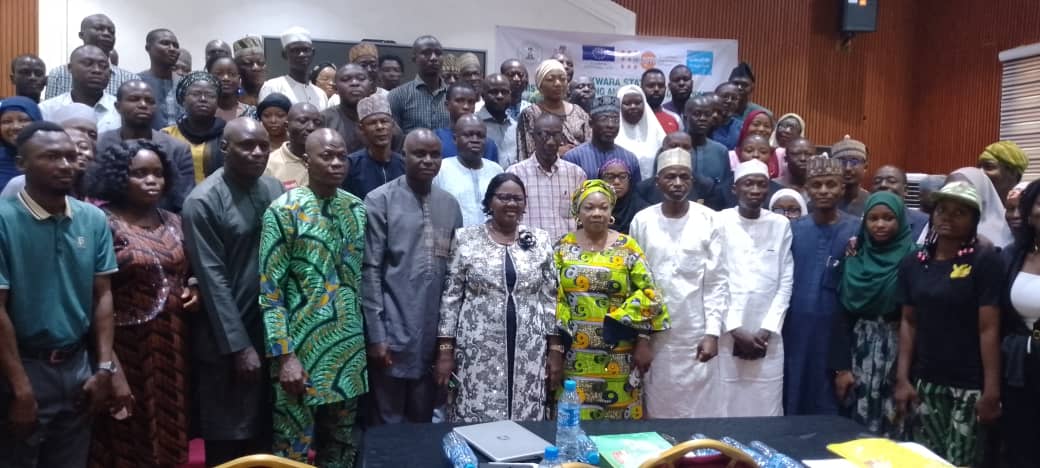
The renewed commitment was highlighted during a three-day sensitisation and capacity-building workshop on Demographic Dividend held in Ilorin. The programme was organised by UNFPA in collaboration with the Kwara State Ministry of Planning and Economic Development and the Health Policy Training and Research Programme (HPTRP) of the Department of Economics, University of Ibadan.
Speaking at the workshop, the Commissioner for Planning and Economic Development, Dr Mary Arinde, said the initiative was designed to equip key stakeholders with the technical knowledge required to harness the state’s youthful population for socio-economic advancement.
She noted that demographic dividend represents the economic and social gains that can be achieved when a larger proportion of the population falls within the productive age bracket, while the number of dependents remains relatively low.
“Demographic dividend is the economic and social benefits that can be derived when a larger proportion of the population consists of productive and working-age individuals, with fewer dependents.
“This presents significant opportunities for accelerated development as well as requires deliberate policy actions and sustained investments to unlock its full potential,” she said.
Arinde stressed that the AbdulRahman AbdulRazaq-led administration remains committed to unlocking the potential of the state’s young population through strategic investments in education, healthcare, family planning, skills acquisition, employment generation and youth empowerment programmes.
According to her, Kwara is currently at a crucial stage of its demographic transition, with its youthful population offering immense opportunities despite existing challenges.
While acknowledging progress in maternal and child healthcare, basic education and youth-focused initiatives, the commissioner identified gaps in family planning services, women’s economic participation and labour market reforms that require urgent attention.
In her goodwill message, the Sexual and Reproductive Health Specialist at UNFPA, Mrs Gloria Enueze, described the workshop as part of efforts under the EU-SARAH Project, a joint initiative of UNFPA and UNICEF aimed at advancing human capital development.
She commended the Kwara State Government for supporting the programme, saying the collaboration reflects the state’s commitment to inclusive growth and sustainable development.
“Demographic dividend refers to the economic growth potential that can result from changes in a country’s population structure, particularly when the working-age population becomes larger than the dependent population. However, achieving this dividend is not automatic.
“It requires deliberate investments in education, healthcare, sexual and reproductive health, youth empowerment, gender equality, job creation, and good governance,” Enueze said.
She added that targeted investments in adolescents and young people, alongside improved access to quality reproductive health services, would accelerate the state’s journey towards sustainable development and shared prosperity.
Enueze reaffirmed UNFPA’s commitment to supporting policies and programmes that enhance the wellbeing of women, adolescents and young people while advancing the demographic dividend agenda in the state.
Also speaking, the Acting Director of the Health Policy Training and Research Programme, University of Ibadan, Dr Noah Olasehinde, emphasised the need for governments to deliberately harness the potential of Nigeria’s large youth population.
He identified health and wellbeing, education and skills development, employment and entrepreneurship, as well as governance and youth participation as the four critical pillars of demographic dividend.
Olasehinde urged governments to prioritise youth health and quality education while creating an enabling environment for private sector growth and job creation.
“Employment is within the purview of government and they need to also provide enabling environment for the private sector to thrive and employ these youths,” he said.
He further advocated the establishment of incubation centres and skills acquisition hubs across the country, stressing that formal education must be complemented with practical skills to prepare young Nigerians for productive engagement in the economy.
Leave a Reply