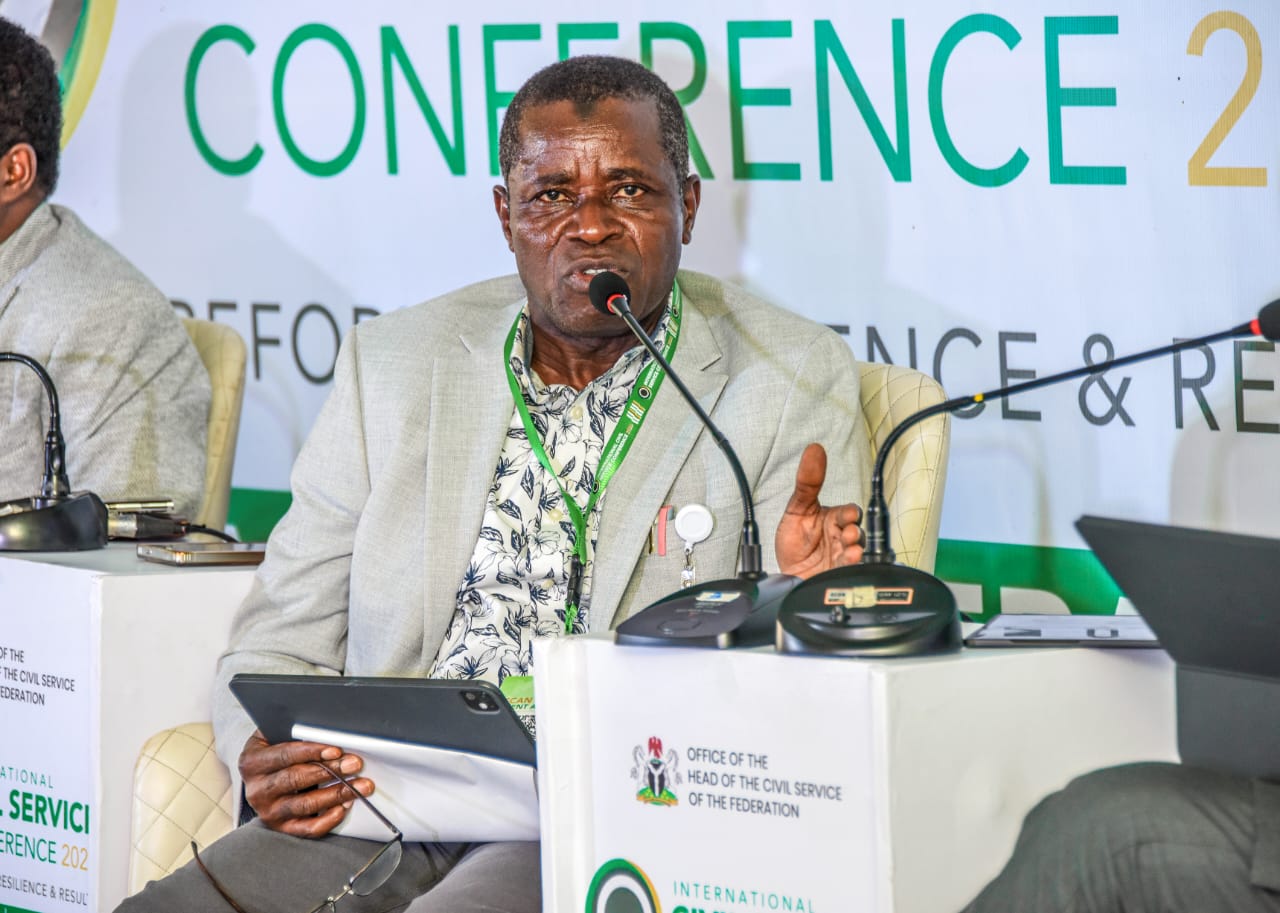
The Permanent Secretary, Federal Ministry of Works, Mr. Rafiu Olarinre Adeladan, has reaffirmed that infrastructure development remains the foundation of economic growth and sustainable national development, stressing that no nation can attain meaningful progress without substantial investment in critical infrastructure. Speaking at the International Civil Service Conference 2026 held on Thursday in Abuja, the Permanent Secretary described infrastructure as a key driver of economic transformation, noting that the present administration has prioritised infrastructure and transportation as central pillars of national development. According to him, countries such as the United States, the United Kingdom, Germany, and South Africa have continued to achieve significant economic advancement through deliberate and sustained investments in roads, railways, power, and other essential infrastructure. He explained that infrastructure plays a strategic role across all sectors of the economy, including agriculture, transportation, commerce, and oil and gas, by facilitating the movement of goods and services, enhancing productivity, attracting investments, and improving the quality of life of citizens. Adeladan further disclosed that the Federal Ministry of Works has adopted modern and resilient road construction technology known as Continuously Reinforced Concrete Pavement (CRCP), in line with global best practices and in response to the growing impact of climate change on road infrastructure. He noted that although CRCP roads require higher initial construction costs, they are more durable, environmentally sustainable, cost-effective over time, and capable of withstanding heavy traffic loads for up to 50 years with minimal maintenance. The Permanent Secretary added that the adoption of concrete pavement technology promotes local content development through the utilisation of locally sourced materials and labour, thereby creating employment opportunities and stimulating economic growth. Addressing the challenges confronting infrastructure development in Nigeria, Adeladan identified inadequate funding as a major constraint, particularly given the enormous resources required to bridge the nation’s infrastructure deficit. He explained that government alone cannot provide all the funding needed for infrastructure development, hence the increasing adoption of Public-Private Partnerships (PPP) and concession arrangements for major road projects nationwide. He cited the Benin–Asaba Road and the Abuja–Keffi–Akwanga corridor as examples of projects already concessioned to ensure sustainable maintenance, improved efficiency, and enhanced service delivery. The Permanent Secretary stressed the importance of designing infrastructure projects with clear developmental objectives, sustainability, climate resilience, and community needs in mind, noting that infrastructure investments must deliver tangible socio-economic benefits and long-term public value. Also speaking at the conference, the Permanent Secretary, State House, Mr. Temitope Peter Fashedemi, underscored the importance of proper planning and climate-conscious infrastructure delivery to mitigate losses caused by flooding, erosion, and poor maintenance culture. Similarly, the Permanent Secretary, Federal Ministry of Water Resources and Sanitation, Dr. Emanso Umobong, advocated the integration of technology, smart city concepts, community participation, and human capital development in infrastructure planning and implementation. In his remarks, the Director-General/Chief Executive Officer of the Infrastructure Concession Regulatory Commission (ICRC) emphasised that Nigeria’s huge infrastructure gap requires stronger private sector participation, noting that sustainable infrastructure financing can only be achieved through an enabling environment that guarantees investor confidence and reasonable returns on investment. The conference brought together top government officials, policymakers, development experts, and other stakeholders to deliberate on strategies for strengthening infrastructure delivery and promoting sustainable national development through innovation, technology, and collaborative partnerships.


Leave a Reply