

By Prosper Okoye
For some elderly Nigerians, growing old was supposed to mean spending more time with family, drawing on decades of experience and enjoying the security of a home they had spent years building.
Instead, some are spending their later years in internally displaced persons camps, after violence forced them from communities they may never be able to return to.
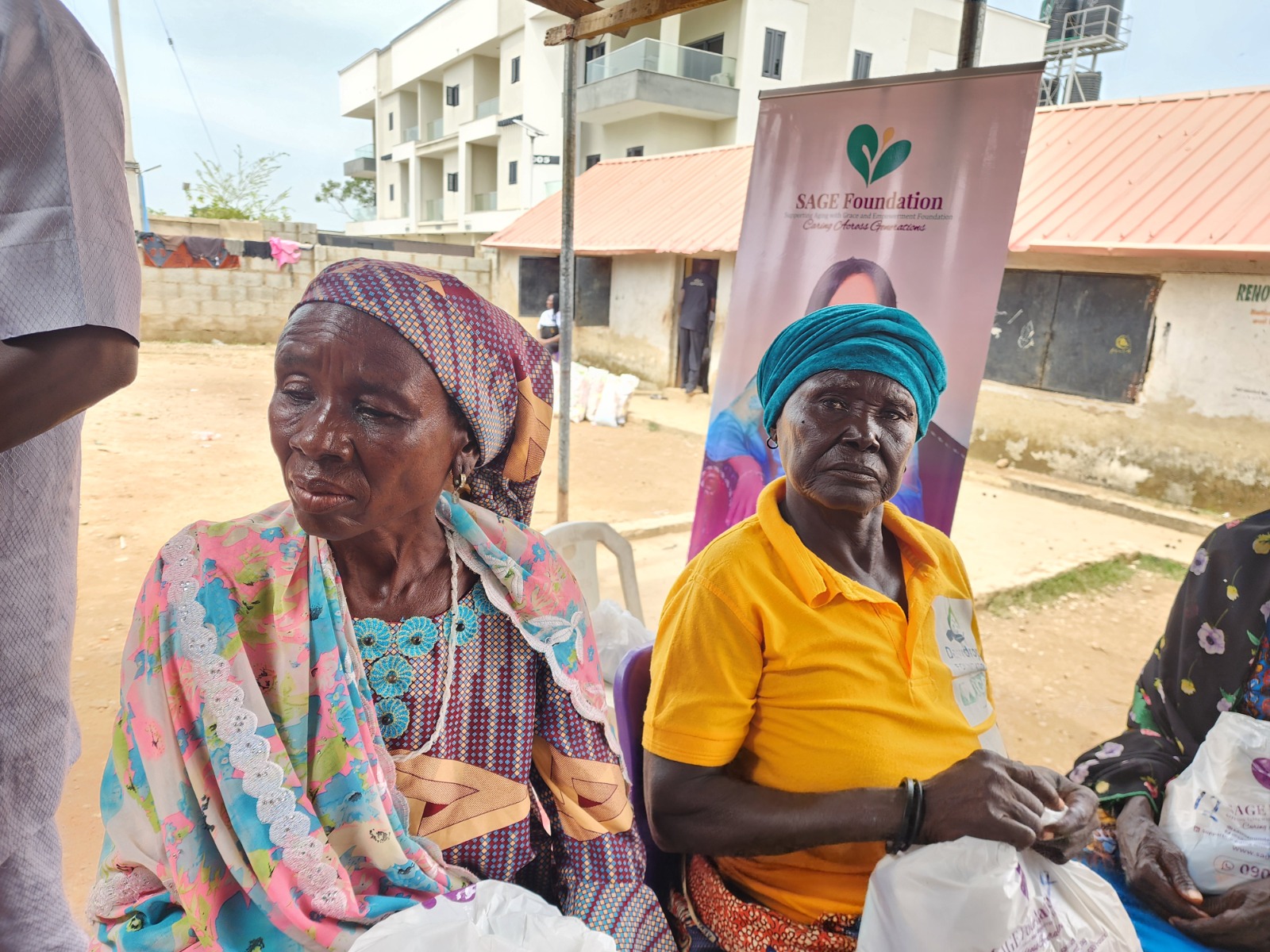
At the Games Village IDP camp in Nigeria’s capital, older men and women are living with the consequences of displacement that go beyond the loss of homes and livelihoods. Many face chronic health problems, reduced mobility, loneliness and dependence on relatives who are themselves struggling to survive. For some, their children have left the camp to look for work or return to conflict-affected communities, leaving elderly parents behind in what they consider a safer environment. The result is a different kind of displacement: being separated from the people who would normally provide care in old age.
A different kind of vulnerability
Internal displacement can be difficult at any age. But for older people, the loss of a home can also mean the loss of the networks that made everyday life possible.
A farmer may no longer have land. A trader may have lost a business. A community leader may find himself with no community to lead. Someone who spent decades surrounded by neighbours and relatives can suddenly find themselves living among strangers.
Age also narrows the options available to rebuild. For younger displaced people, finding work may offer a path towards independence. For an elderly person with limited physical strength or chronic illness, that option may no longer exist.
The question becomes less about rebuilding a livelihood and more about getting through the day.
When children have to leave
Some older people in the camp are not without children. Their children are simply somewhere else. Families displaced by conflict often face choices that have no easy answer. A son may leave to find work. A daughter may return to another community to provide for her own children. Parents may remain behind because the camp offers greater security or because travelling has become physically difficult. The children may still send money when they can. But money cannot replace a person sitting beside an elderly parent when illness comes. It cannot provide the reassurance of a familiar voice at night or the companionship of a grandchild. For an older person, absence can become another form of loss.
When illness becomes a financial decision
Healthcare presents another challenge.
Older people are more likely to live with chronic conditions requiring regular monitoring and treatment. Hypertension and diabetes may require continuing medication. Poor eyesight can make daily activities difficult. Arthritis and other musculoskeletal conditions can limit movement. Dental problems can affect nutrition. Mental health needs can be even harder to see.
Grief, anxiety, depression, loneliness and cognitive decline may go unnoticed when humanitarian assistance is focused on immediate survival.
For families already struggling to provide food, healthcare can become a series of difficult choices: medicine or food, hospital transport or another household expense.
Nigeria’s broader healthcare financing system adds to the pressure. A 2025 WHO/AHOP assessment reported that out-of-pocket payments accounted for more than 75% of total health expenditure in Nigeria, leaving low-income households exposed to potentially catastrophic health costs.
For an elderly person living in displacement, the consequences can be severe. A medical problem that might be manageable with regular treatment can become an emergency when treatment is delayed because there is no money to pay for it.
The gap between policy and reality
Nigeria has expanded its policy framework for universal health coverage. The National Health Insurance Authority, established under the 2022 NHIA Act, operates programs intended to extend health insurance beyond formal-sector workers, including the Group, Individual and Family Social Health Insurance Programme and mechanisms aimed at vulnerable populations.
The authority’s universal health coverage agenda also recognises the elderly. But reaching an older person in an IDP camp requires more than having a program on paper.
Someone may need help registering. They may lack identification documents. They may not understand the scheme or know where to seek care. Even when enrolled, transportation to a facility and other costs can remain barriers. And an elderly person may have several health needs at the same time because aging is not a single disease.
The needs that can disappear from view
Healthcare for older people is often discussed in terms of hypertension and diabetes. But the needs are broader.
An elderly person may need assistance with mobility, hearing, eyesight, oral health, nutrition or mental health. Some may experience cognitive decline or dementia.
Forgetfulness, confusion or withdrawal can easily be dismissed as simply part of getting old.
But for someone living in displacement, identifying such problems can be especially difficult.
When a family is trying to find its next meal, there may be little time or money to investigate why an elderly parent has become increasingly confused or withdrawn.
The result is that some conditions remain untreated until they become much more serious.
Not every older person in an IDP camp lives alone.
Many live with children and grandchildren.
But living together does not necessarily mean a family has the resources to cope. A son who has lost his livelihood may now be responsible for his mother, his wife and several children. A daughter already struggling to feed her own children may also have to find money for her father’s medication.
Food assistance can help a household survive today.
Chronic illness continues tomorrow.
That is where the burden of ageing becomes a family problem rather than an individual one.
More than medicine
There is another loss that is harder to measure. Loneliness.
Displacement can take away neighbours, friends, places of worship, familiar routines and the social roles people have occupied for decades.
An elderly farmer may no longer have a farm. A trader may no longer have a shop. A community elder may no longer have the community around him. For people who spent much of their lives caring for others, suddenly becoming dependent can also affect their sense of identity.
That is why support for older people cannot be limited to food, medicine or blood-pressure checks.
They also need companionship, purpose and someone willing to listen.
Giving older people a place in the conversation
It is against this backdrop that SAGE Foundation, through its SAGE Golden Circle initiative, is seeking to draw attention to older people living in vulnerable communities and IDP camps.
At the Games Village camp, the organisation is engaging older people directly, listening to their experiences, identifying their needs and creating opportunities for social interaction and psychosocial support.
The approach is built around a simple premise: displacement may take away a person’s home, but it should not take away their dignity.
Mrs. Chika Nwankwo, a public health professional and Dementia Research Scientist said older people should not be viewed as people whose usefulness has ended.
“When we look at an elderly person, we must not see somebody whose usefulness has ended,” she said. “We are looking at a person who has lived, contributed, raised families and built communities.”
Nwankwo said public health programming should recognise that older people have needs that differ from those of children and younger adults.
“An older person has different needs from a child or a young adult. Their healthcare needs, their emotional needs and even their need for companionship require deliberate attention,” she said.
She hailed SAGE Foundation for the Golden Circle initiative.
“We must listen. We need to understand what older people are going through, connect them to the support available and keep bringing their voices into the conversation,” she said.
Counting the people behind the numbers
Nigeria’s displacement crisis is often measured in numbers: how many people have fled, how many camps exist and how much assistance has been delivered. But those numbers can conceal important differences within displaced populations. An elderly person does not experience displacement in the same way as a child.
The needs of a person living with diabetes are different from those of someone with dementia or Alzheimer’s. A person with limited mobility faces different barriers from a young person able to walk several kilometres to seek assistance. For older people, the response may need to include age-disaggregated data, accessible healthcare, chronic disease management, mental health and psychosocial support, mobility assistance, dementia awareness and stronger social protection.
Health insurance must also become accessible in practice, not simply available as a policy.
For the elderly people already living in Nigeria’s IDP camps, these are not abstract policy questions. They are questions of whether they can see a doctor when they are sick, whether they can afford their medicines, whether someone will notice when they are struggling and whether they can remain connected to the families and communities they spent their lives building. Displacement may have taken their homes. It should not take their place in society. And for those growing old far from the communities they once knew, survival should not be the only measure of whether the response has succeeded.
The greater test is whether they can still age with dignity.
Leave a Reply