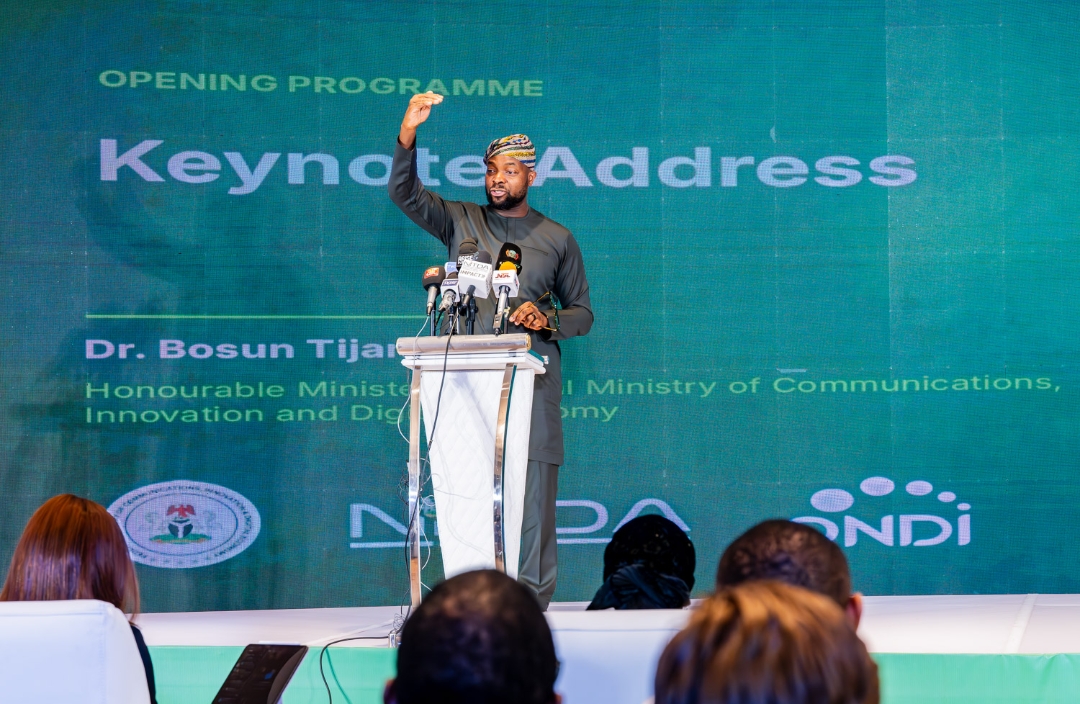
The Federal Government has called for increased investment in technology hubs, innovation spaces, and ecosystem builders across Nigeria, identifying them as foundational engines for cultivating local talent and driving the digital economy. Speaking in Abuja at the National Innovation Hub Standards Framework Validation Workshop, the Minister of Communications, Innovation and Digital Economy, Dr. Bosun Tijani, emphasised that economic diversification cannot succeed without directly empowering the grassroots communities and co-working spaces that nurture emerging entrepreneurs. Drawing from his background as a tech hub manager, Dr. Tijani noted that while prominent startups often make the headlines, the physical hubs providing mentorship, networking, and early-stage guidance are frequently overlooked. He stressed that ongoing government investments in broad digital infrastructure—such as fibre-optic expansion, satellite connectivity, and cloud systems—must be paired with direct capacity building for hub personnel, warning that physical infrastructure alone cannot deliver sustainable economic transformation. Highlighting the need to move beyond an oil-dependent economy, the Minister pointed to homegrown success stories like Paystack to illustrate what becomes possible when local talent receives adequate institutional backing. He advocated for adopting global best practices and elevating hub standards nationwide, asserting that closing the quality gap among regional hubs would spur widespread business creation, generate vital tax revenues, and drive nationwide job growth. To address these regional disparities, the National Information Technology Development Agency (NITDA) is introducing the National Innovation Hub Standards Framework. NITDA Director-General Kashifu Inuwa explained that the non-prescriptive initiative is designed to offer operators a clear, structured roadmap to evaluate their capabilities, address operational gaps, and transition basic training centres into mature incubation and entrepreneurship spaces. Inuwa expressed concern over the heavy concentration of innovation activity in Lagos and Abuja, despite over 339 hubs identified nationwide and massive entrepreneurial talent distributed across every state. He stated that ecosystems do not thrive by accident but by design, and the proposed framework aims to help communities build sustainable ecosystems tailored to their unique economic realities rather than enforcing a rigid, one-size-fits-all model. The NITDA boss also underscored the essential roles of private-sector risk capital, corporate engagement, and academic collaboration. He emphasized that government funding alone cannot sustain the startup ecosystem, while revealing ongoing initiatives with the Federal Ministry of Education to embed digital skills into formal school curricula and align academic research directly with industry needs. Ultimately, Inuwa described the draft framework as a collective blueprint and urged founders, investors, and academia to collaborate on refining it. Strengthening local hub networks will empower young innovators to build commercially viable enterprises without being forced to migrate to major cities, ensuring that homegrown solutions drive inclusive economic progress across all regions of Nigeria.


Leave a Reply