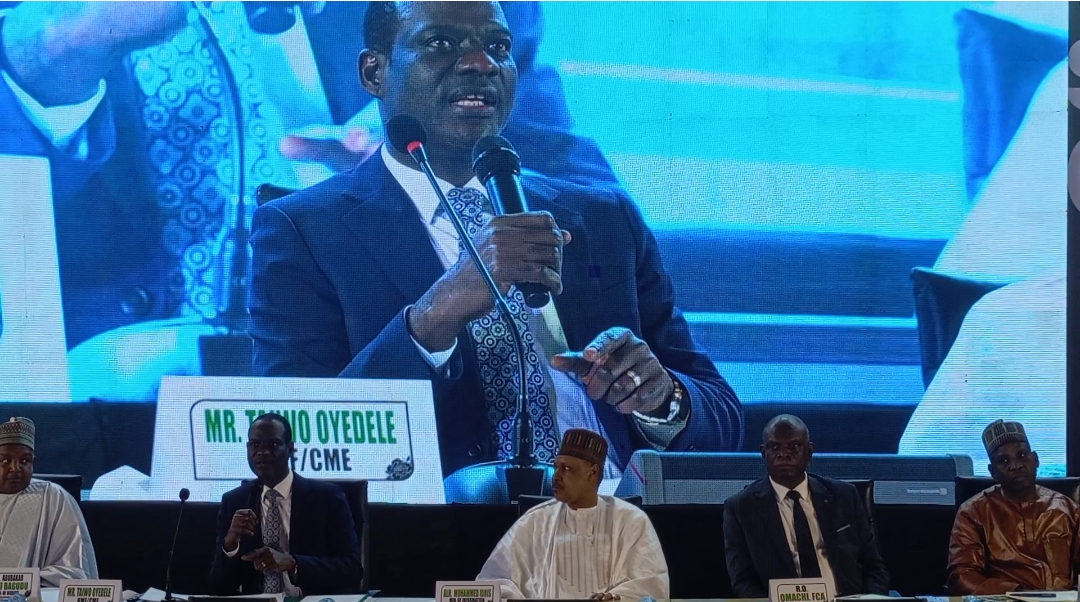
The Federal Government has rejected any opinion suggesting going back from the petrol subsidy removal, maintaining that the economic policies introduced since June 2023 have expanded fiscal space and averted severe financial deterioration. Presenting the economic reform scorecard covering June 2023 to December 2025 in Abuja, the Minister of Finance and Coordinating Minister of the Economy, Taiwo Oyedele, stated that the reforms were critical to eliminating market distortions, rent-seeking, and unsustainable fiscal habits. According to the scorecard, the federation recorded N15.8 trillion in subsidy savings over the period, with N10.4 trillion distributed to states and local governments via the Federation Account and N5.4 trillion allocated to the Federal Government. These savings were augmented by N3.1 trillion in independent revenue surpluses from government agencies and N11.9 trillion raised through incremental borrowing, bringing total new resources available to the Federal Government to approximately N20.4 trillion. However, the government’s incremental spending reached N30.64 trillion, exceeding the newly generated resources and requiring roughly N10 trillion to be funded from the existing revenue base. The expenditure was largely driven by N9.39 trillion in wage adjustments and minimum wage increases—an amount that alone surpassed the federal share of subsidy savings—alongside N9.37 trillion for external debt servicing due to currency depreciation, and N6.5 trillion dedicated to strategic infrastructure. Oyedele emphasized that financing roughly two-thirds of the spending through structured resources while capping Central Bank Ways and Means financing reflects improved public financial management. He noted that total incremental resources were composed of 58 percent borrowing, 27 percent subsidy savings, and 15 percent other revenues, demonstrating that the primary objective of the subsidy removal was long-term macroeconomic stability rather than simple revenue generation. The scorecard evaluated 25 indicators across five core thematic areas: fiscal sustainability, external stability, the investment climate, social impact, and growth and productivity. The data indicated marked gains in external reserves, exchange-rate unification, economic growth, and fiscal durability compared to a counterfactual “no-reform” scenario, while welfare initiatives expanded through the N70,000 minimum wage, student loans for 1.5 million beneficiaries, cash transfers, and agricultural support. Acknowledging the heavy public burden, the minister noted sharp increases in the Monetary Policy Rate to 26.5 percent and petrol prices settling between N1,100 and N1,400 per litre. Nonetheless, he warned that maintaining past policies would have caused acute fuel scarcity, thriving black markets, and depleted foreign reserves, reiterating that reversing the reforms would not restore previous price levels. The Federal Government has published the full scorecard and fiscal analysis on the Ministry of Finance website for public oversight. Oyedele affirmed that the next phase of the reform program will prioritize translating achieved macroeconomic stability into tangible household relief through sustained tax reforms, expanded social safety nets, agricultural interventions to curb food inflation, and closer coordination with subnational governments.


Leave a Reply