

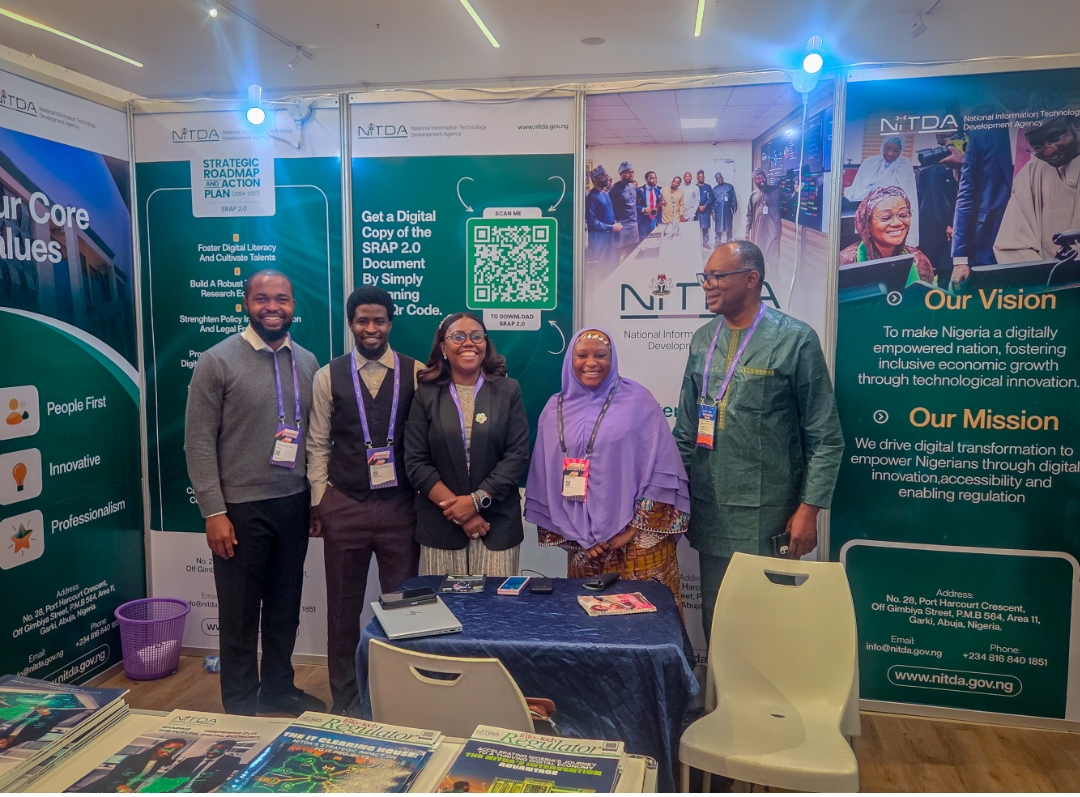
The Director-General of the National Information Technology Development Agency (NITDA), Kashifu Inuwa Abdullahi, CCIE, has issued a bold charge to African innovators, investors, and policymakers to transition the continent from a consumer of global technologies into a competitive creator of homegrown digital solutions, intellectual property, and sustainable enterprises. Speaking through his keynote address at TechCabal’s Moonshot 2026 conference held at the National Theatre in Lagos under the theme “Courage & Conviction — Building for a New World,” Abdullahi declared that Africa’s technological future must be driven by innovation, entrepreneurship, and measurable economic impact, asserting that the continent’s next chapter will be defined by the value it has the courage to create.
While acknowledging Africa’s exceptional pool of technological talent, the NITDA boss highlighted persistent structural hurdles, including limited access to financing, infrastructure, mentorship, and viable markets. To overcome these barriers, he advocated for a more cohesive collaborative framework uniting government bodies, academic institutions, tech companies, investors, and innovation hubs.
Underpinning this effort is NITDA’s Strategic Roadmap and Action Plan (SRAP 2.0), which positions the agency as a central ecosystem orchestrator. Abdullahi explained that SRAP 2.0 focuses on bridging key functional gaps by systematically connecting digital talent to opportunities, research outputs to commercialization, early-stage startups to capital, innovative products to markets, and technological developments to public trust.
Challenging the current narrative within the technology sector, Abdullahi urged stakeholders to move past vanity metrics—such as hackathons, pitch competitions, and funding headlines—and focus instead on building resilient, commercially viable enterprises. “The true measure of an innovation ecosystem is not how many startups it celebrates, but how many sustainable enterprises it helps create,” he noted, stressing the need for ventures that create sustainable jobs and solve real-world problems.
To catalyze this transition, the Director-General announced the upcoming Builders’ Festival, set to take place during the Digital Nigeria International Conference and Exhibition from November 10–12, 2026, in Abuja. Designed to link indigenous startups directly with corporate clients, potential buyers, and investors, the initiative aims to mobilize a ₦3 billion investment deal pipeline for promising tech entrepreneurs—a figure he clarified as a target for deal flow rather than committed public funding.
Turning to emerging technologies, Abdullahi urged Nigeria to spearhead homegrown artificial intelligence development tailored to essential local sectors—including agriculture, healthcare, education, manufacturing, and local-language models—rather than relying solely on imported AI applications. He called on private investors, corporate leaders, and policymakers to align their strategies by providing patient capital, market access, and supportive regulatory framework.
Concluding his address, Abdullahi maintained that Africa’s long-term digital competitiveness hinges on three core pillars: innovation, trust, and disciplined execution. Emphasizing that the future belongs to those with the courage to build and sustain solutions, he called on African innovators to pursue global ambitions that drive lasting economic prosperity across the continent, urging stakeholders to move from questioning whether Africa can build the future to actively demonstrating how it will be done.
Leave a Reply