

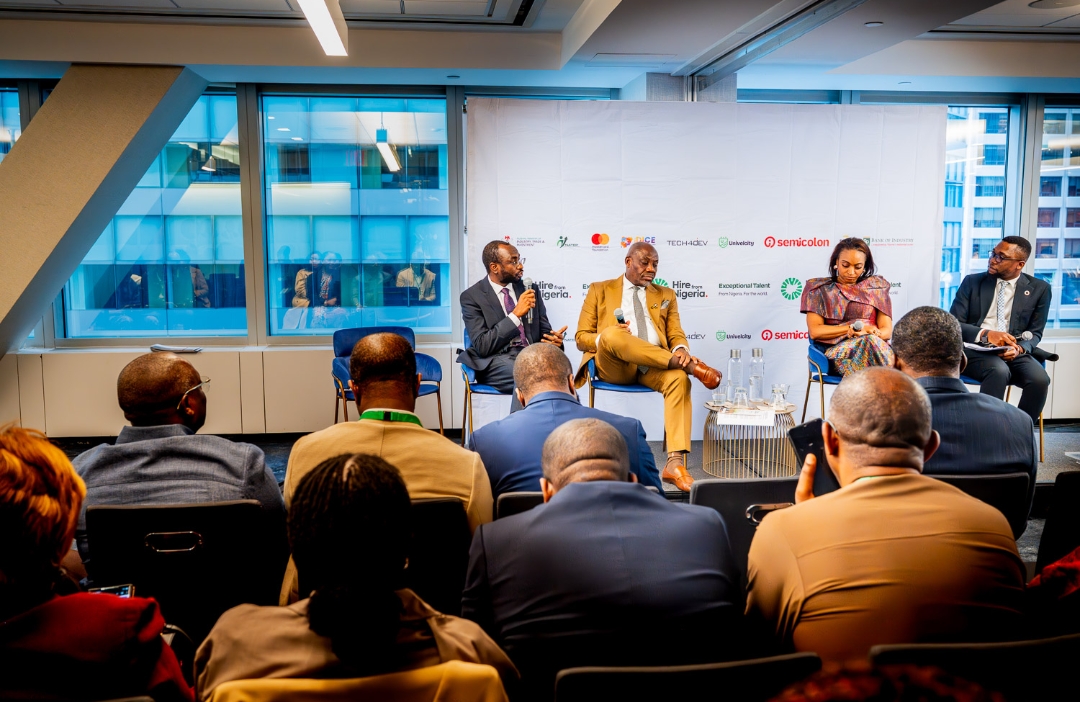
Nigeria’s ambition to establish itself as a premier global hub for digital services gained powerful momentum on the sidelines of the 81st United Nations General Assembly (UNGA 81). During the high-level “Hire from Nigeria” session organized by the Nigeria Economic and Trade Advancement Programme (NATEP), the Director-General and CEO of the National Information Technology Development Agency (NITDA), Kashifu Inuwa Abdullahi, CCIE, presented a bold vision for the nation’s evolving role in the international tech landscape.
The NITDA boss participated in a strategic dialogue alongside key federal leaders, including the Honourable Minister of Industry, Trade and Investment, Dr. Jumoke Oduwole, and the Honourable Minister of Education, Dr. Moruf Alausa. Together, the panel explored critical drivers of national growth—such as impact sourcing, international trade, skill acquisition, and inclusive employment—while showcasing Nigeria’s expanding readiness to deliver high-value, technology-enabled services to the global market.
Emphasizing a shift in strategy, Abdullahi noted that the country’s competitive edge must evolve past conventional outsourcing models. Driven by the rapid rise of Artificial Intelligence, Nigeria has a unique window to establish a distinct market position centered on AI-augmented, IT-enabled services. The priority, he stressed, is to empower local talent not merely to utilize emerging tools, but to comprehend, innovate, and create sustainable economic value through them.
To support this transformation, the DG outlined Nigeria’s robust regulatory frameworks covering data privacy, digital identity, cybersecurity, digital infrastructure assurance, data classification, sovereign cloud, and software quality testing. He asserted that building strong trust, security, and regulatory clarity is crucial for instilling confidence in international enterprises and cementing Nigeria’s reputation as a safe, dependable destination for digital investment.
Underpinning these regulatory efforts are aggressive physical infrastructure projects designed to support advanced computing needs. Abdullahi highlighted Project BRIDGE—an ambitious initiative aimed at laying 90,000 kilometers of fiber optic cable across the country—alongside the national Cloud First Policy. These measures are specifically crafted to incentivize private-sector investment in domestic data centers, computing infrastructure, and specialized AI factories.
The DG further stressed the vital necessity of cultural and economic representation within the modern tech ecosystem. He cautioned that societies absent from the training datasets of global intelligent systems risk becoming invisible in the tools driving the future. To address this, Nigeria is building indigenous capabilities through the National Centre for Artificial Intelligence and Robotics (NCAIR) and the National Artificial Intelligence Strategy, ensuring local talent remains directly linked to global opportunities.
Ultimately, Abdullahi’s presentation delivered a clear and compelling mandate for the country’s technology sector. Nigeria’s ultimate goal extends far beyond merely supplying remote talent to foreign companies; it is about equipping Nigerian innovators with cutting-edge AI capabilities, resilient digital infrastructure, and world-class expertise to deliver sophisticated, high-value digital services to the global economy.
Leave a Reply