

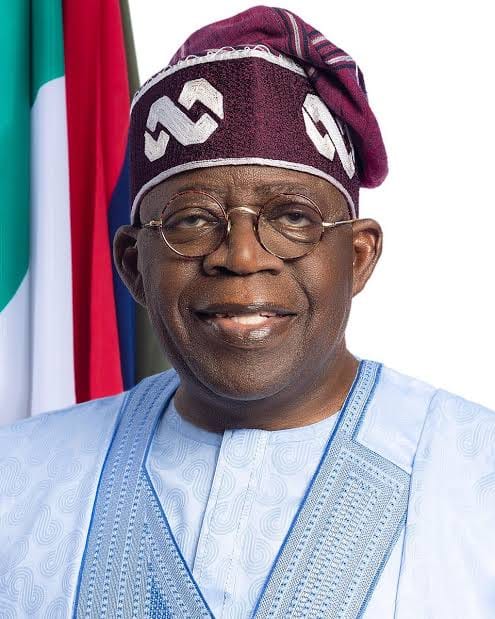
President Bola Ahmed Tinubu has challenged Nigerian universities to move beyond the routine production of degree holders and become engines of innovation, entrepreneurship, research and economic transformation.
Tinubu made the call on Tuesday in Ilorin, Kwara State, while declaring open the 37th Annual Conference and General Assembly of the Committee of Vice-Chancellors of Nigerian Universities (CVCNU), hosted by the University of Ilorin.
Represented by the Minister of State for Education, Prof. Suwaibat Saidu Ahmad, the President said Nigeria’s quest for sustainable economic growth would remain incomplete without deliberate investment in human capital and a university system capable of responding to emerging global realities.
He described universities as strategic partners in the Federal Government’s development agenda, urging them to produce graduates equipped with practical skills and the capacity to solve real-world problems.
“Universities are more than institutions where degrees are awarded. They are centres of knowledge creation, innovation, critical thinking, entrepreneurship, cultural development and national transformation,” Tinubu said.
The President said Nigerian graduates must be academically sound while also becoming innovative, ethical, digitally competent, entrepreneurial and adaptable.
He challenged vice-chancellors to critically examine the quality and relevance of graduates being produced at a time when artificial intelligence, automation, biotechnology, data science, renewable energy and advanced manufacturing are reshaping the global economy.
“The question before us is no longer simply whether our universities are producing graduates. The more foundational question is: what kind of graduates are we producing?” he asked.
Tinubu said his administration was implementing reforms under the Nigerian Education Sector Renewal Initiative to improve the quality, accessibility, affordability and accountability of tertiary education.
According to him, the reforms focus on institutional governance, quality assurance, research and innovation, digital transformation, skills development and stronger collaboration between universities and industry.
He particularly emphasised the need to bridge the gap between classroom learning and practical experience, disclosing that the government had begun reviewing curricula to increase practical training.
Tinubu cited agriculture as an example, saying the government was shifting the training model from predominantly theoretical instruction to a system heavily focused on practical experience.
“We are moving away from 70 per cent theory and 30 per cent practical to a robust 80 per cent practical and 20 per cent theory,” he said.
He added that accreditation requirements would compel universities, faculties and departments of agriculture to establish partnerships with relevant industries, while students would undergo industrial attachments during their programmes.
The President said the approach would gradually be extended to other disciplines through the ongoing review of the Core Curriculum and Minimum Academic Standards (CCMAS).
Tinubu also called on universities to intensify research partnerships with government agencies, industries, development partners and communities, stressing that research must translate into products, technologies, policies and solutions capable of addressing Nigeria’s challenges.
“Nigeria cannot become a globally competitive economy by relying primarily on the consumption of knowledge generated elsewhere,” he said.
“Our universities must become powerful engines of research, innovation, technology development and entrepreneurship.”
On university administration, the President urged vice-chancellors to prioritise accountability, effective planning and prudent management of public resources.
He reminded them that their responsibilities went beyond academic leadership to include managing institutions, employees, finances and relationships with communities and other stakeholders.
“Leadership, vice-chancellorship, is not about research. It is about administrative skills. It is about the ability to manage both research and humans at the same time,” Tinubu said.
He further urged universities to align their programmes with labour market demands and expand internships, entrepreneurship initiatives, work-based learning and university-industry partnerships.
According to him, graduates should leave tertiary institutions prepared to become “value creators, innovators, entrepreneurs, professionals, researchers and responsible citizens,” rather than relying solely on paid employment.
Tinubu also highlighted the importance of student welfare and access to higher education, noting that government initiatives, including the Nigerian Education Loan Fund, were designed to reduce financial barriers confronting students.
He, however, stressed that financial support must be matched with quality academic programmes, functional infrastructure, effective student services and safe and inclusive learning environments.
The President called for greater collaboration among government, university authorities, students, academics, the private sector, regulators, professional bodies, development partners, alumni and host communities to reposition Nigeria’s higher education sector.
He said the CVCNU conference should serve as a platform for university leaders to move beyond identifying challenges and develop practical strategies capable of strengthening the country’s tertiary education system.
Tinubu commended the Committee of Vice-Chancellors for sustaining the annual conference as a platform for dialogue and collaboration, while congratulating the University of Ilorin for hosting the gathering.
He subsequently declared the conference open, charging participants to use the opportunity to chart a new course for a more competitive, innovative, inclusive and responsive university system.
Leave a Reply